Most people think holiday stress begins in December, but for many people, especially couples, it starts earlier in November. That’s when family expectations, cultural obligations, financial planning, and the emotional weight of the season begin creeping in.
If you’ve noticed more tension, frustration, or emotional distance lately, you’re not alone. Couples across Vancouver, Burnaby, and New Westminster often feel the pressure before the holiday season even officially begins.
This stress doesn’t mean your relationship is failing, it’s a sign that your nervous system is feeling overloaded, and old attachment patterns are showing up more strongly than usual.
Why November Is a High-Stress Month for Couples
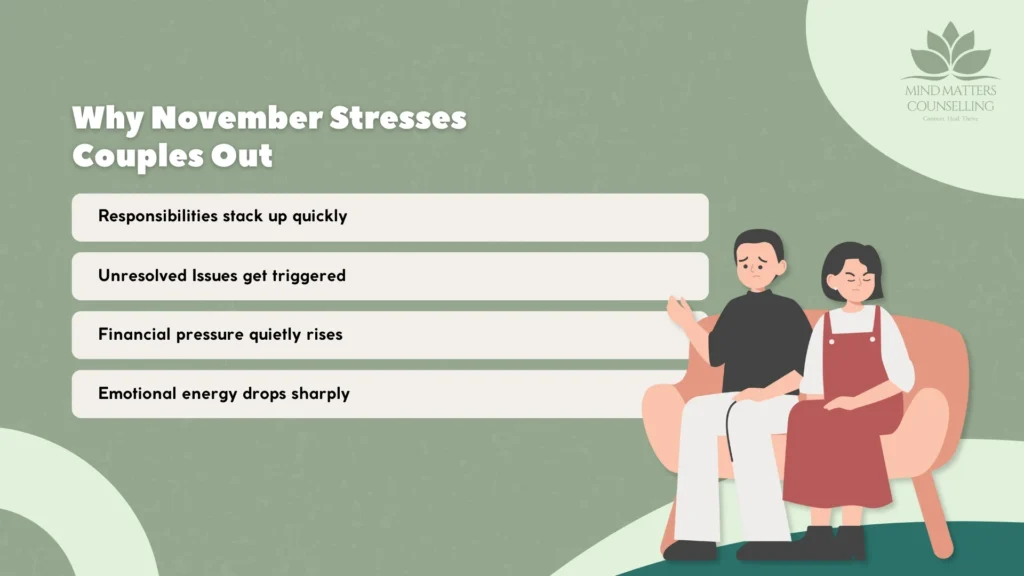
1. The Invisible Load Builds
Even before holiday celebrations, couples start mentally preparing for everything the season entails:
- Planning visits to family and extended relatives
- Organizing travel, accommodation, and schedules
- Buying gifts and budgeting expenses
- Managing household responsibilities
In many relationships, one partner carries the majority of this mental and emotional work, often without realizing the strain it causes. This imbalance is a leading cause of arguments and frustration.
Signs your emotional load is too heavy:
- Feeling responsible for everyone’s happiness
- Constantly planning or anticipating problems
- Resentment building quietly
- Feeling exhausted before the season even begins
2. Attachment Triggers Intensify
The holidays naturally increase opportunities for closeness, conflict, and emotional vulnerability.
Common patterns that emerge in couples:
- Anxious attachment: fear of disappointing your partner, hyper-awareness of tone, overthinking minor interactions
- Avoidant attachment: feeling overwhelmed by emotional closeness, withdrawing, or avoiding conflict
When these patterns interact, small disagreements can escalate quickly.
3. Unresolved Issues Surface
November’s pressures act like a spotlight, making past issues harder to ignore.
- Arguments over minor matters feel amplified
- Emotional distance becomes more noticeable
- Old patterns of criticism, withdrawal, or people-pleasing re-emerge
These arguments aren’t new — they are old wounds resurfacing because stress levels are higher.
4. Cultural Expectations Add Pressure
For South Asian couples, November often involves navigating layered family expectations:
- Balancing visits to both sides of the family
- Respecting cultural traditions and rituals
- Handling questions or judgment from relatives
- Managing differences in family dynamics and expectations
These pressures can heighten emotional labor and create additional stress in the relationship.
5. Financial Stress Quietly Grows
Money concerns quietly increase as November approaches:
- Gifts, travel, and holiday hosting
- Budgeting conflicts between partners
- Differences in spending habits or financial priorities
Small financial disagreements can quickly escalate under holiday stress.
6. Emotional Bandwidth Shrinks
The combination of stressors means both partners may have less patience and empathy:
- More irritability
- Shorter emotional fuse
- Reduced capacity for conflict resolution
- Feeling disconnected even while physically present
How Couples Therapy Can Help
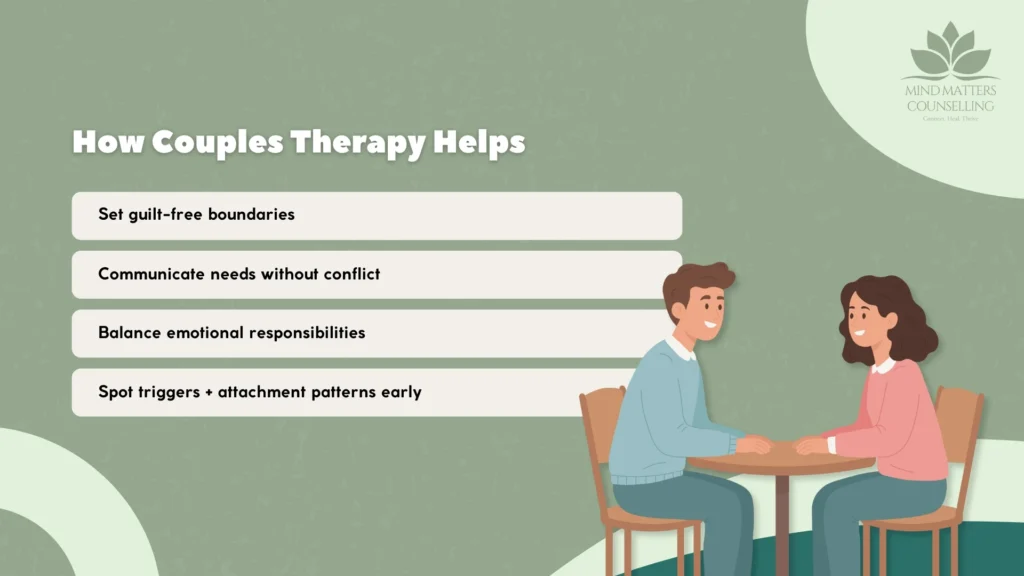
Couple Therapy isn’t about “fixing” your partner or making the holidays perfect. Instead, counselling helps couples:
- Navigate family and cultural boundaries
- Communicate needs without creating conflict
- Reduce emotional labor imbalance
- Understand attachment patterns and triggers
- Repair small issues before they grow
- Strengthen emotional connection under pressure
Approaches like attachment therapy, emotion-focused therapy, and somatic work support couples in building stronger, calmer, and more connected relationships — especially during high-pressure months like November.
If This Feels Familiar — You’re Not Alone
If you’ve been noticing more tension, arguments, or distance this November, it doesn’t mean your relationship is failing.
It means you’re human, your nervous systems are reacting to stress, and some support can help you reconnect before the holidays get more overwhelming.
Signs it may be time for therapy:
- Frequent arguments over minor issues
- Feeling emotionally disconnected
- One partner carrying the majority of household or emotional work
- Anxiety or dread about upcoming family events
👉 Book a session with a couples therapist at Mind Matters Counselling (Vancouver, Burnaby, and New Westminster).