Winter is a hard season for anyone in recovery — but for ICBC clients healing from a car accident, it can feel like your body and mind suddenly take steps backward.
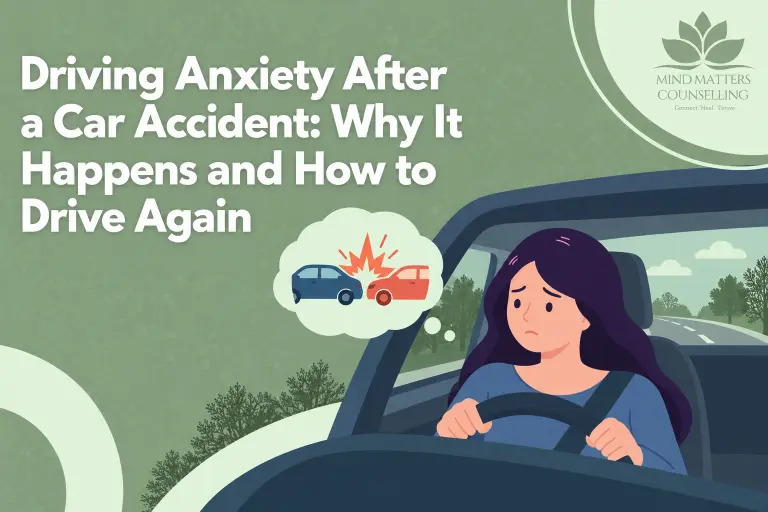
You may notice yourself gripping the steering wheel tighter, avoiding driving at night, or feeling your heart race on icy roads even if you weren’t nervous before. Many clients tell me, “I thought I was doing better… why is it suddenly worse?”
The truth is: your nervous system remembers more than your mind does, and winter conditions tend to re-trigger the very sensations connected to your accident.
Why Winter Makes Accident Recovery Harder
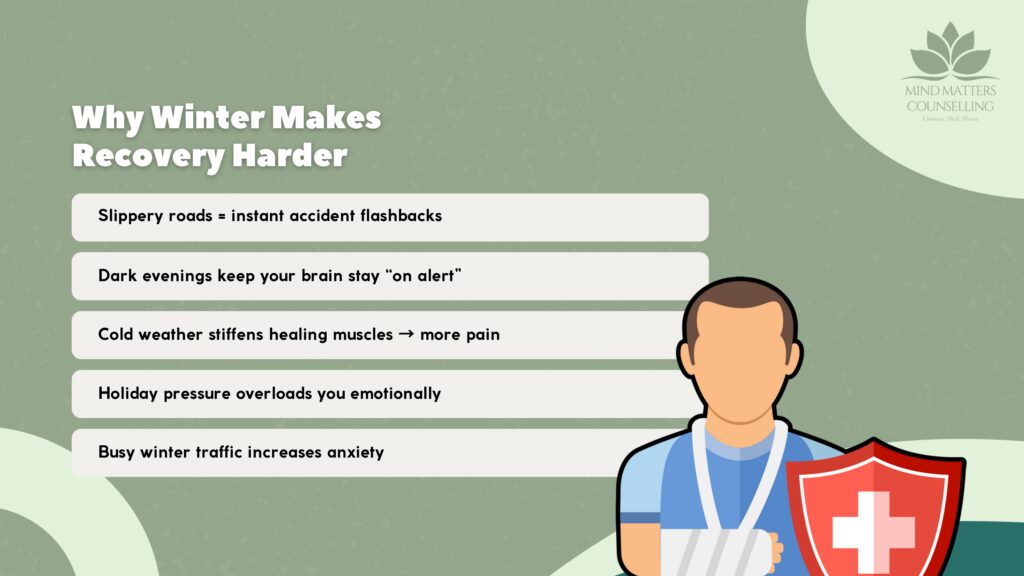
- Slippery roads mimic the conditions of your accident — even if your accident wasn’t in winter, the unpredictability of weather feels unsafe.
- Longer nights increase hypervigilance — the dark makes your brain more alert to danger.
- Cold weather tightens muscles that are already healing from injury, increasing pain and tension.
- Holiday stress piles on, lowering emotional resilience.
- Traffic increases during the season, raising anxiety and startle responses.
Clients often wonder why their ICBC Claim seems to “flare up” — physically and psychologically — as the weather shifts. But this is extremely common.
A Nervous System Response, Not a Personal Failure
After a car accident, your body learns one thing above all:
“I need to stay safe.”
That means environments that feel uncertain — rain, darkness, snow, fast traffic — instantly activate your survival system. It’s not dramatic. It’s not “overreacting.”
It’s the body doing exactly what it was trained to do during trauma.
Signs Your Winter Anxiety Is Related to Your Accident
Clients often report:
- Sudden spikes of fear while merging or turning
- Avoiding highways or unfamiliar routes
- Flashbacks triggered by slippery roads
- Body tension or jolts at sudden braking
- Headaches or neck pain increasing with cold weather
- Feeling drained after short drives
- Difficulty sleeping due to increased worry
If you relate to even one of these, you’re not alone — and it’s treatable.
How an ICBC Counsellor Supports You Through the Winter Season
Working with an ICBC-approved counsellor gives you access to trauma-informed strategies designed specifically for post-accident recovery.
At Mind Matters Counselling, our approach integrates:
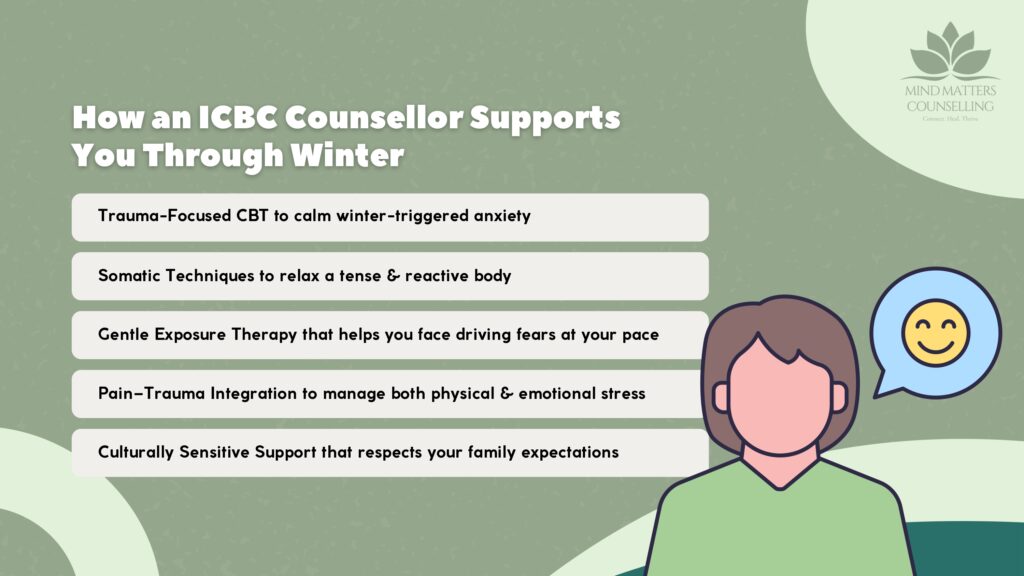
1. Trauma-Focused CBT
Helps you separate real danger from the fear memory and rebuild your confidence.
2. Somatic Regulation Techniques
You learn to calm the body’s automatic fear response through breathing, grounding, and body-awareness.
3. Gradual Exposure (At Your Pace)
For clients who feel ready, we help you slowly rebuild your driving tolerance without pushing you.
4. Pain–Trauma Integration
Winter flare-ups often increase pain, which increases fear. We address both.
5. Cultural Sensitivity & Family Expectations
Especially important for South Asian clients, where family may expect “quick recovery” or minimize emotional symptoms.
You Can Recover Fully — Even If Winter Makes It Hard
Healing doesn’t move in a straight line.
Winter isn’t a setback — it’s a season that reveals where your nervous system still needs support.
With trauma-informed therapy, those triggers can soften.
Driving can feel normal again.
Your body can relearn safety.
Book an ICBC counselling session with Mind Matters Counselling to feel supported through this season of recovery.
FAQs
- 1. How can I cope with anxiety after a car accident?Feeling anxious after a car accident is a very common and natural response. Your nervous system may still be in “survival mode,” even after the physical danger has passed. You might notice fear while driving, intrusive memories, trouble sleeping, or constant tension in your body. Helpful steps include:
- Learning grounding and breathing techniques to calm your nervous system
- Gently returning to driving or travel at your own pace
- Talking through the accident with a trauma-informed counsellor
- Addressing both emotional stress and physical discomfort together
- 2. Why does winter make accident recovery more difficult for ICBC clients?Winter can intensify both emotional and physical symptoms after a car accident. Cold weather tightens muscles, which can increase pain and stiffness from injuries. Slippery roads, snow, and reduced visibility may also remind you of the accident, keeping your body on high alert. Shorter days and limited sunlight can affect mood and energy levels, making it harder to cope with stress. For many ICBC clients, winter creates the perfect conditions for heightened anxiety, fear, and emotional exhaustion during recovery.
- 3. What are the signs that my winter anxiety is related to a past accident?Winter-related anxiety linked to a car accident often shows up in subtle ways. Common signs include:
- Increased fear or panic while driving in rain, snow, or darkness
- Muscle tension, headaches, or body pain that worsens in cold weather
- Feeling on edge, hyper-alert, or easily startled
- Avoiding driving, highways, or certain routes
- Trouble sleeping or recurring thoughts about the accident
- 4. How does an ICBC counsellor support clients during the winter season?An ICBC counsellor provides trauma-informed support tailored to your experience and the challenges winter brings. Counselling focuses on helping your nervous system feel safe again—both emotionally and physically. Support may include:
- Trauma-focused therapies such as CBT
- Somatic and body-based regulation techniques
- Gradual exposure to driving or accident-related triggers
- Tools to manage pain-stress and anxiety cycles
- Emotional support that respects cultural and family expectations
- 5. How long does it take to heal after a car accident?There is no fixed timeline for healing after a car accident. Physical injuries may improve within weeks or months, but emotional recovery often takes longer—especially if anxiety, fear, or trauma responses are involved. Recovery depends on factors such as:
- The severity of the accident
- Past trauma or previous accidents
- Level of emotional and social support
- Weather conditions and seasonal stressors