In therapy rooms, November often signals the start of something very different: rising anxiety, emotional overload, family tension, guilt, financial pressure, and the deep feeling of “I’m supposed to be happy right now… so why do I feel so stressed?”
The truth is this:
Holiday stress is real, valid, and more common than anyone talks about.
Clients often walk into session saying things like:
- “I don’t even know why I’m anxious — it’s not like anything bad is happening.”
- “My family means well, but they drain me.”
- “I’m already overwhelmed thinking about everything I need to do.”
- “I can’t say no. It’s the holidays.”
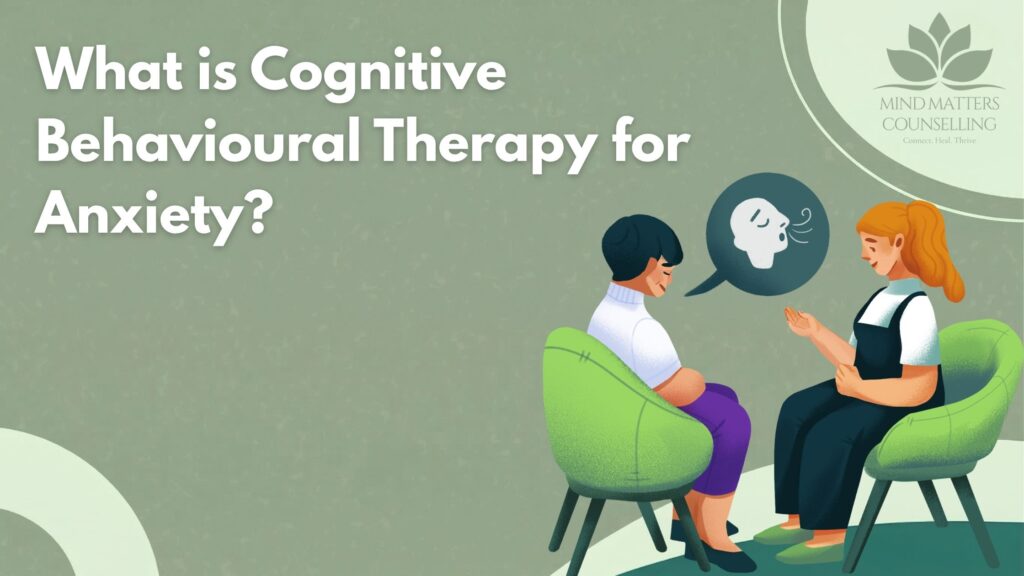
This is exactly where Cognitive Behavioural Therapy (CBT) becomes one of the most effective tools to help you understand and manage what’s happening beneath the surface.
Why the Holidays Trigger So Much Anxiety
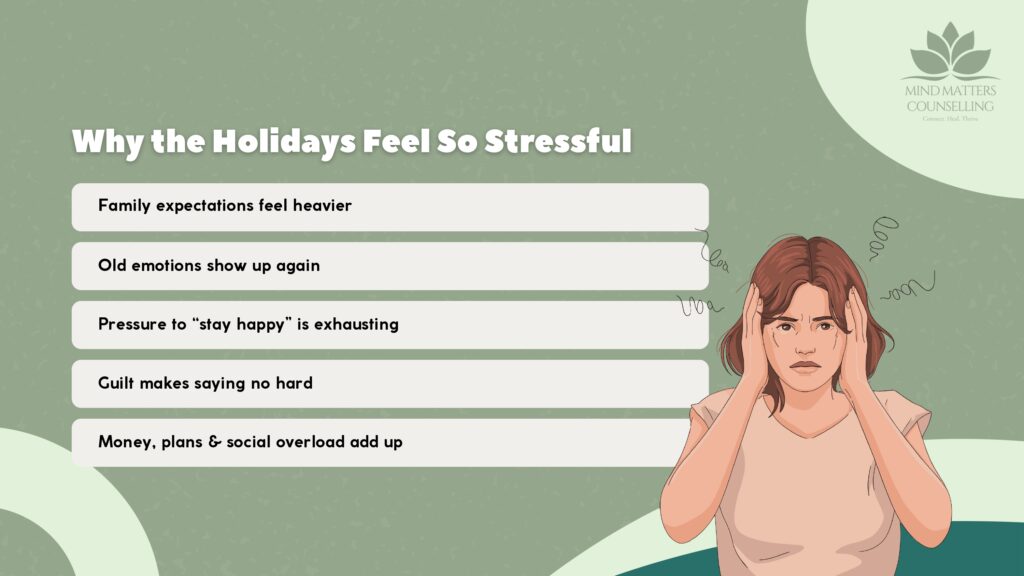
Even though the holidays are marketed as peaceful, the weeks leading up to December are often filled with invisible emotional pressure.
1. Family Dynamics Intensify
Old patterns come back quickly:
Being the responsible one.
The quiet one.
The mediator.
The strong one.
The parentified child.
When we return to family environments — even loving ones — old roles reappear, and your nervous system reacts before you even realize it.
2. Unspoken Expectations Build Up
Holiday stress comes from internal and external pressure:
- Buying gifts
- Attending events
- Hosting
- Being “cheerful”
- Spending money
- Keeping the peace
- Avoiding conflict
- Navigating in-laws
- Meeting cultural expectations
All of these add up emotionally and mentally.
3. The Need to “Perform” Happiness
You may find yourself pretending.
Putting on a smile.
Acting okay so you don’t “ruin the mood.”
This emotional masking is exhausting.
4. Financial Stress Feels Heavier
Between gift-giving, dinners, travel, and time off work, money becomes a big source of pressure — especially for clients juggling responsibilities or supporting extended family.
5. Comparison & Social Media Pressure
Seeing other people’s “perfect” holiday photos can spark quiet shame:
“Why doesn’t my family look like that?”
“Why don’t I feel excited?”
“What’s wrong with me?”
Nothing is wrong with you.
Your nervous system is responding to stress, and CBT helps you make sense of it.
How CBT Therapy Helps You Navigate Holiday Stress
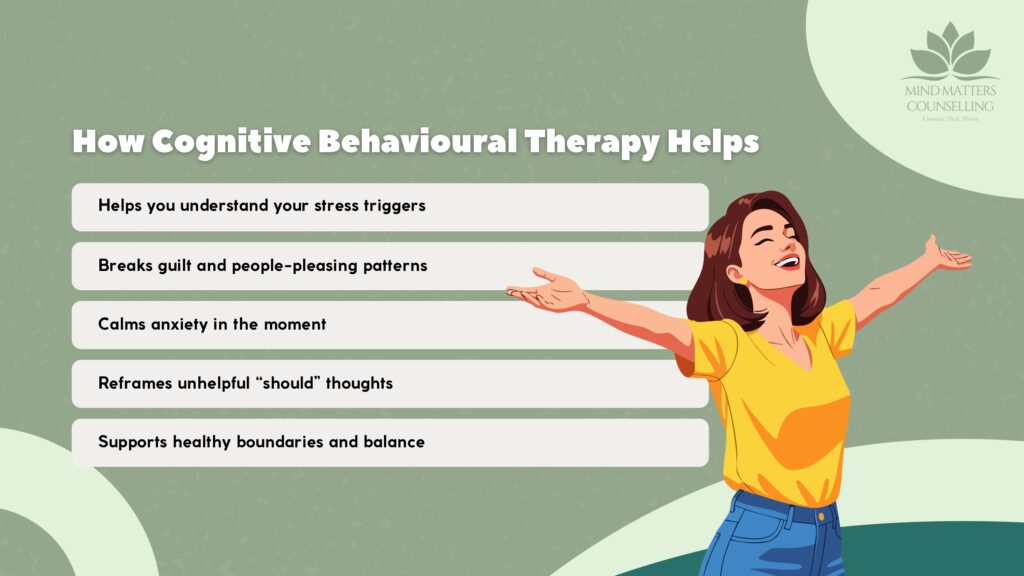
Cognitive Behavioural Therapy works by helping you understand the relationship between your thoughts, emotions, and behaviours.
Most holiday stress doesn’t come from the events themselves — it comes from the meaning your mind attaches to them.
CBT helps you slow down, examine your thoughts, and shift out of survival mode.
Here’s how.
1. Identifying Your Holiday Triggers
CBT helps you explore what specifically feels heavy for you:
- Certain family members
- Feeling responsible for everyone’s happiness
- Being asked personal questions you don’t want to answer
- Cultural expectations
- Pressure to host or participate
- Toxic or difficult relatives
- Fear of conflict
- Fear of disappointing someone
- Guilt around saying no
Naming your triggers is the first step to reducing the emotional charge they hold.
2. Challenging Holiday-Based “Should Statements”
Many clients operate from hidden rules like:
- “I should be happy.”
- “I should attend every event.”
- “I should buy gifts for everyone.”
- “I should keep the peace.”
- “I shouldn’t upset anyone.”
In CBT, we gently challenge these beliefs by asking:
Where did this rule come from?
Is it helpful?
Is it realistic?
Is it fair?
Is it compassionate toward yourself?
These “shoulds” often come from childhood, culture, or family systems — not from your authentic adult needs.
3. Reframing Unhelpful Thoughts
Holiday stress is typically amplified by distorted thinking patterns, such as:
Mindreading:
“They’ll think I’m selfish if I say no.”
Catastrophizing:
“If there’s even a small conflict, the whole dinner will be ruined.”
Emotional Reasoning:
“I feel anxious, so something must be wrong.”
In CBT sessions, you learn how to reframe these into balanced, realistic thoughts that support emotional regulation rather than fuel anxiety.
4. Learning Nervous System Regulation Tools
CBT integrates grounding and somatic strategies such as:
- Box breathing
- Progressive muscle relaxation
- Mindful distraction
- Cognitive defusion
- Body scanning
- Releasing guilt-based tension
These help you stay calm during triggering moments — not after.
5. Developing Scripts for Boundary-Setting
One of the most helpful CBT tools for the holidays is preparing gentle but firm scripts:
“I won’t be able to make it that day, but thank you for understanding.”
“I’m not comfortable discussing that topic.”
“We can join for dinner, but we’ll be leaving early.”
“My capacity is limited this year.”
Planning these ahead of time lowers anxiety significantly.
6. Breaking the Cycle of People-Pleasing
CBT helps uncover why the holidays make people-pleasing stronger:
- Fear of conflict
- Fear of disappointing parents
- Cultural pressure
- Childhood dynamics
- Identity tied to being “the good one”
Therapy helps you differentiate between want and obligation, so you can make choices aligned with your wellbeing — not guilt.
Most importantly: CBT helps you feel like yourself again
The goal isn’t avoiding the holidays.
It’s being able to move through them with more clarity, calmness, and emotional grounding.
You Don’t Have to Carry the Holiday Pressure Alone
If this time of year leaves you overwhelmed, anxious, or emotionally drained, you’re not alone — and nothing is wrong with you.
Holiday stress has roots in family systems, culture, nervous system responses, and internal pressure.
CBT can help you navigate all of it with more ease and support.
👉 If you want to feel more grounded and in control this holiday season, therapy can help.
Book a session with a counsellor at Mind Matters Counselling.
FAQs
- 1. Why does holiday stress feel more intense than regular stress?Holiday stress often combines family dynamics, emotional expectations, financial pressure, and social comparison. Your nervous system reacts to these layered stressors, even when nothing “bad” is happening.
- 2. Is it normal to feel anxious or overwhelmed during the holidays?Yes. Holiday anxiety is very common. Many people feel pressured to be happy, attend events, or meet expectations that don’t align with their emotional capacity.
- 3. How does Cognitive Behavioural Therapy (CBT) help with holiday stress?CBT helps you understand how your thoughts, emotions, and behaviours interact. It teaches practical tools to manage triggers, reduce anxiety, challenge unhelpful beliefs, and respond more calmly during stressful situations.
- 4. Can CBT help with family pressure and boundary-setting?Absolutely. CBT helps you identify people-pleasing patterns, develop healthy boundaries, and practise scripts that make it easier to say no without guilt.
- 5. How soon can CBT help with seasonal stress?Many clients notice relief within a few sessions, especially when learning practical tools to manage triggers and emotional overload during the holidays.
- 6. Does CBT help with physical symptoms of holiday anxiety?Yes. CBT includes grounding and nervous system regulation techniques such as breathing exercises and muscle relaxation that reduce physical tension and anxiety symptoms.