Holidays are described as a season of joy — but for many people, they quietly reopen the wounds of loss.
You may find yourself smiling in group photos, attending gatherings, buying gifts… all while your chest feels heavy.
This is muted grief — the grief we don’t talk about because the world expects us to be “happy” during the holidays.
Why Holidays Trigger Grief Even Years After the Loss
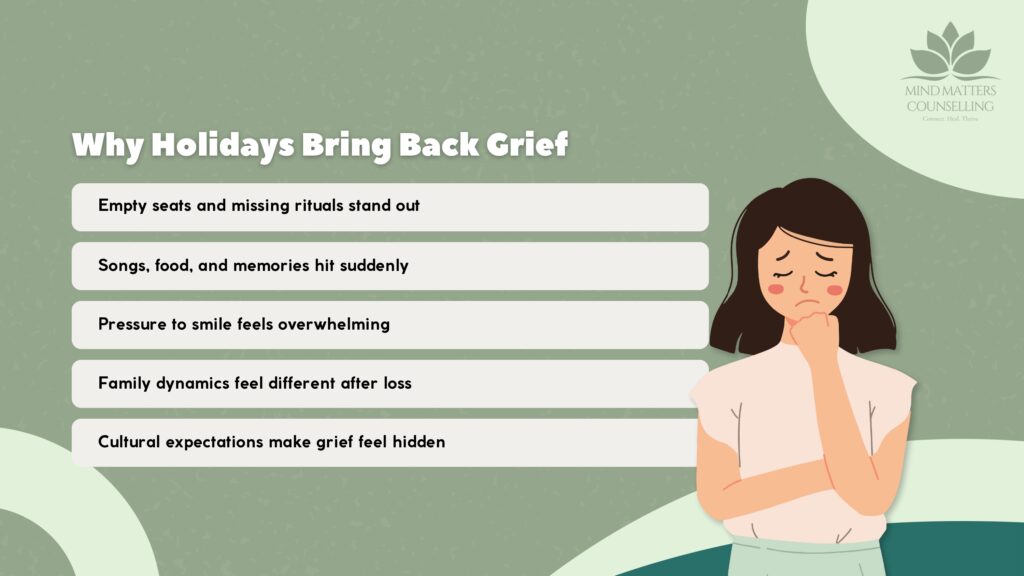
1. Rituals Remind You Who’s Missing
An empty seat.
A recipe they used to make.
A place you visited together.
2. Social Pressure to Be Cheerful
Even well-meaning friends say, “Come on, it’s the holidays — try to enjoy it.”
3. Sensory Memories Are Powerful
Smells, songs, weather, and food can instantly bring emotions to the surface.
4. Family Dynamics Change After Loss
Roles shift, traditions fade, and relationships feel different.
5. Cultural Expectations Can Add Guilt
South Asian clients, for example, often hear:
“Stay strong.”
“Don’t cry too much.”
“Focus on family.”
This can make grief feel like something you need to hide.
Muted Grief Looks Like…
- Feeling tired, numb, or irritable
- Wanting to “skip” certain gatherings
- Overworking or staying busy
- Crying unexpectedly
- Feeling guilty for enjoying yourself
- Comparing this year to “before the loss”
- Struggling with anxiety or low motivation
This is normal.
Your grief hasn’t returned — it’s simply being touched by the season.
How Therapy Helps You Hold Grief During the Holidays
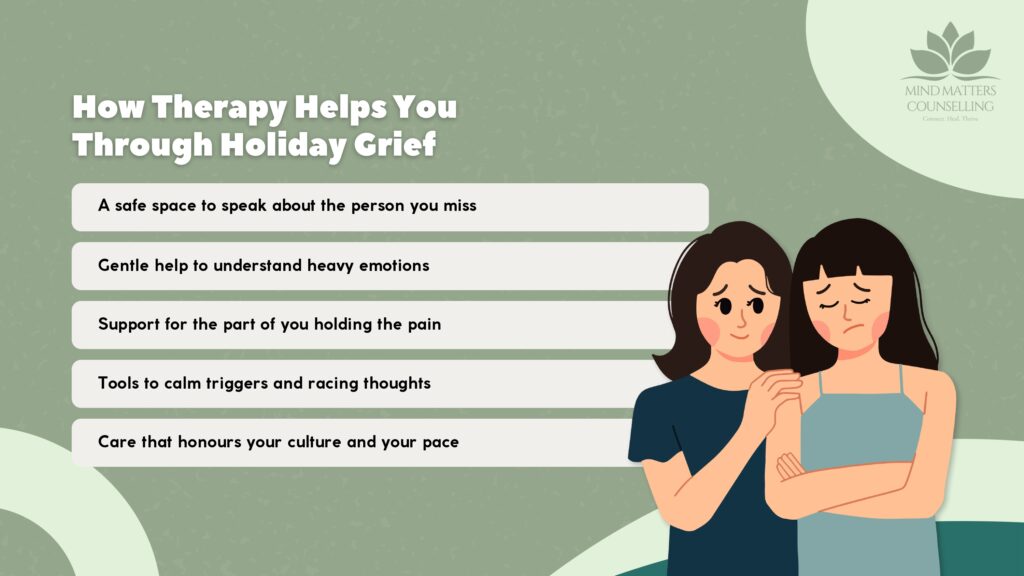
At Mind Matters Counselling, we approach grief with compassion, slowness, and permission.
1. Narrative Therapy
You can safely talk about the person and the story of your relationship.
2. Emotionally Focused Therapy (EFT)
Helps name the hard emotions — longing, guilt, sadness, anger — without shame.
3. Internal Family Systems (IFS)
We help you connect with the part of you carrying the grief so it feels supported, not overwhelmed.
4. CBT for Holiday Triggers
You learn to cope with spiralling thoughts and reduce the emotional weight of reminders.
5. Cultural Understanding
We honour your traditions, rituals, and the ways your family does (or does not) express grief.
You Don’t Have to “Be Okay” This Holiday Season
Grief doesn’t mean you’re broken.
It means you loved deeply.
And during the holidays, it’s completely human for that love — and that loss — to feel louder.
If you’re moving through this season with a grieving heart, you deserve support, softness, and space.
Book a grief counselling session with Mind Matters Counselling. We’re here to help you carry this with compassion.
FAQs
- 1. What is muted grief?Muted grief is the quiet, often hidden experience of grief that people carry while continuing daily life. It commonly shows up during the holidays when emotions are expected to be joyful.
- 2. Why do holidays make grief feel stronger?Holidays activate memories, traditions, and sensory reminders connected to loved ones who are no longer present, making feelings of loss more noticeable.
- 3. How can therapy help with grief during the holidays?Therapy provides a safe space to process emotions, reduce guilt, manage holiday triggers, and honour grief without pressure to “move on.”
- 4. Can grief counselling help even if the loss happened years ago?Absolutely. Grief can resurface long after a loss, and counselling helps individuals understand and support those emotions when they reappear.
- 5. Is grief counselling culturally sensitive at Mind Matters Counselling?Yes. Mind Matters Counselling honours cultural traditions, family values, and different ways grief is expressed or held.