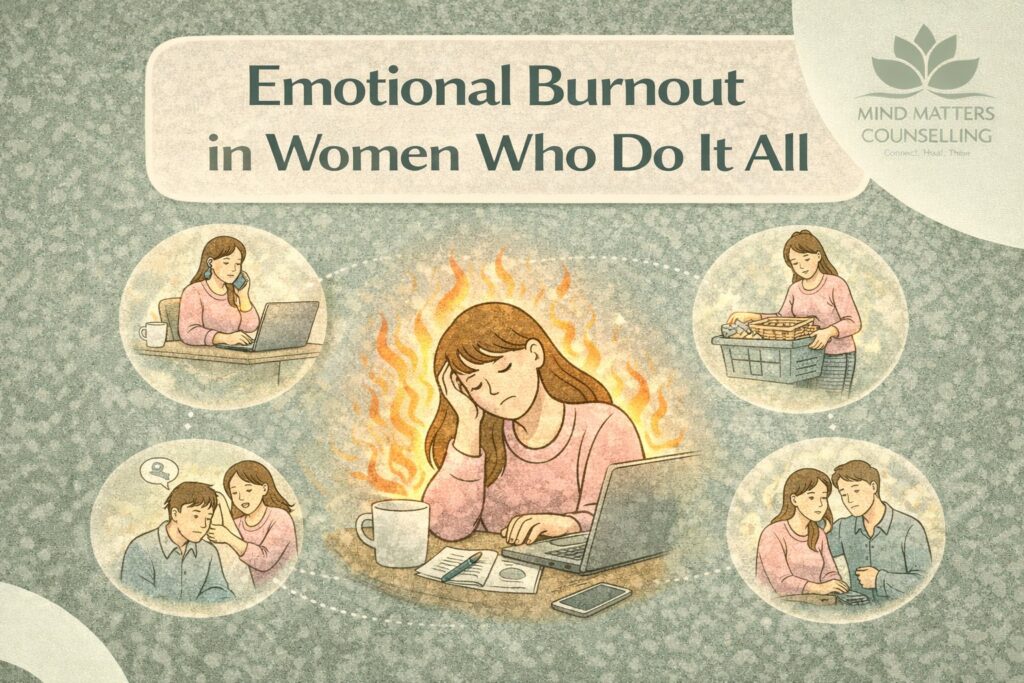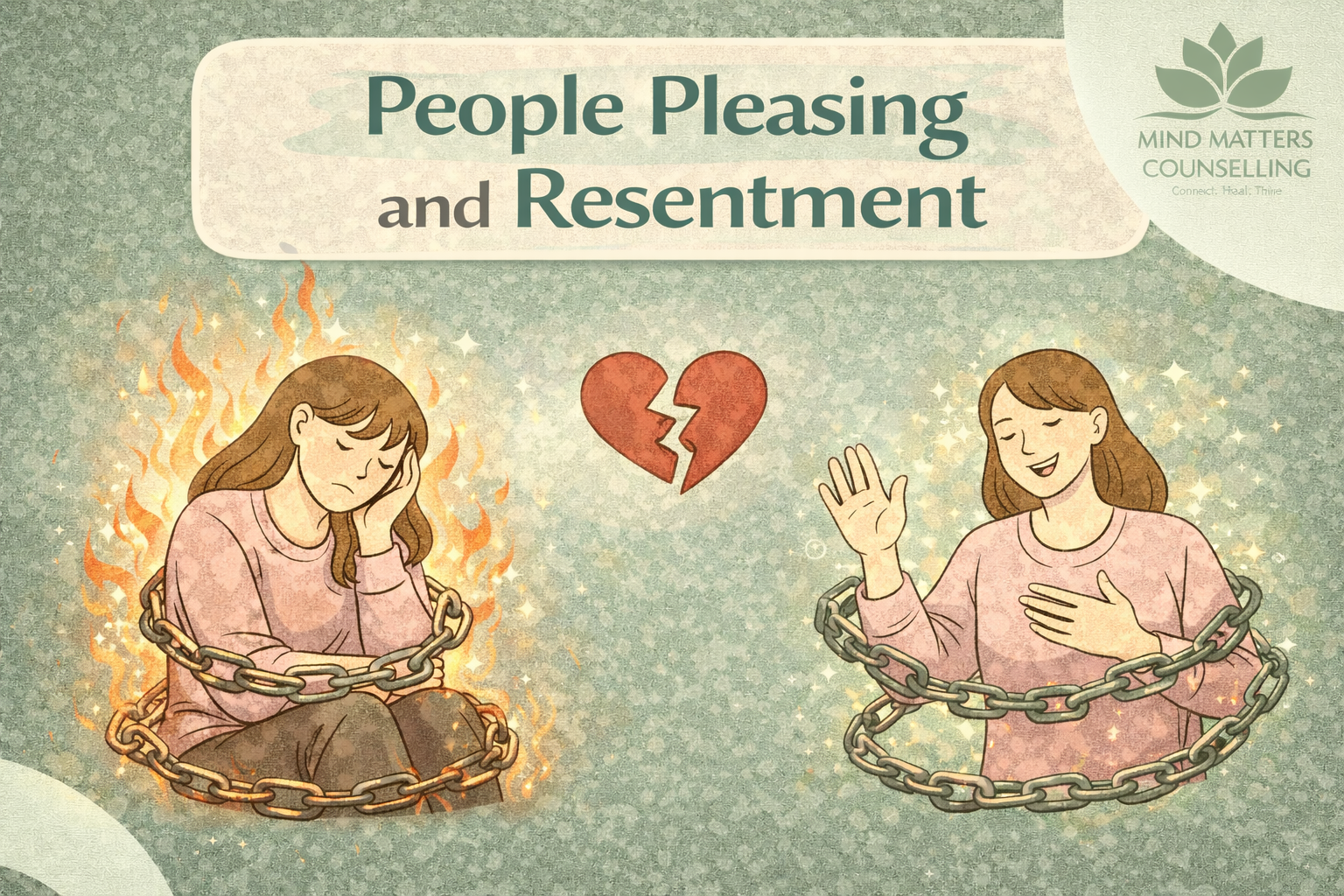
You’re the nice one. The laid back one. The flexible one.
You don’t like to say no. You pick up the slack when others fall short. You alleviate stress and avoid conflict.
And somehow, you end up resentful.
People pleasing is often mistaken for being nice. Chronic people pleasing is usually driven by anxiety, fear of rejection, and codependency.
It leaves you burnt out and resentful.
What is People Pleasing?
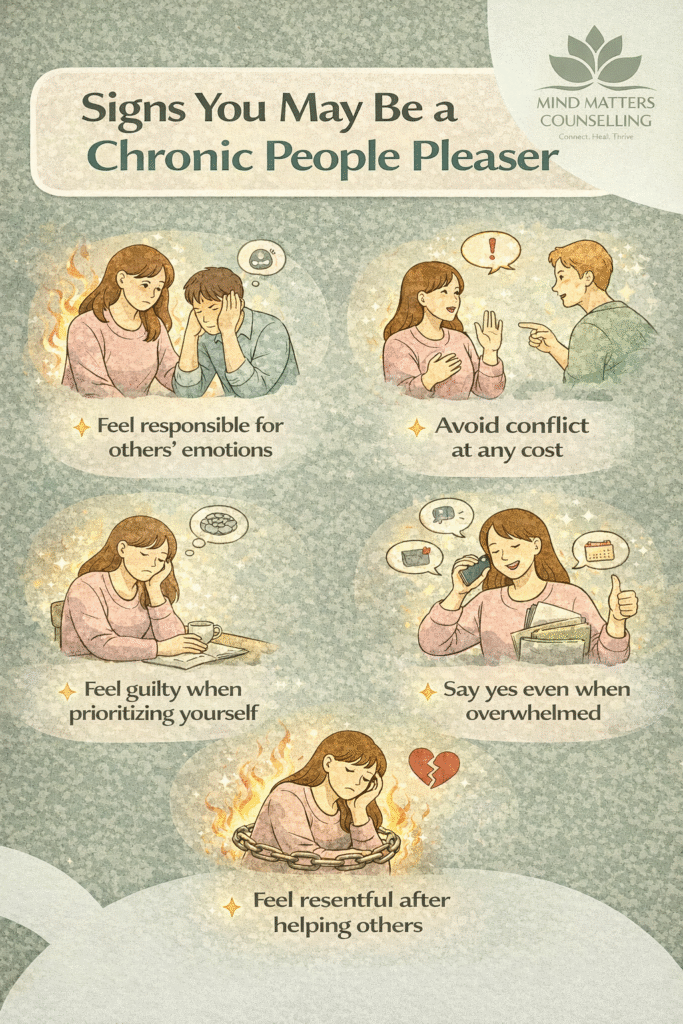
People pleasing involves prioritizing others’ needs at the expense of your own. It may look like:
- Agreeing when you want to say no
- Avoiding difficult conversations
- Taking responsibility for others’ emotions
- Overcommitting
- Feeling guilty when setting boundaries
Many individuals seeking anxiety counselling in New Westminster describe feeling trapped between wanting to be supportive and feeling overwhelmed by the emotional load they carry.
Why Resentment Builds
When your needs consistently go unmet, resentment develops quietly.
You may think:
- “Why doesn’t anyone notice how much I do?”
- “Why do I always have to handle everything?”
- “Why can’t they step up?”
The cycle becomes predictable:
- You overextend.
- Others rely on you.
- You feel overwhelmed.
- You stay silent.
- Resentment grows.
Without intervention, this pattern can strain romantic relationships, friendships, and family dynamics.
The Link Between People Pleasing and Anxiety
People pleasing is often tied to anxiety. Saying no can trigger fear, fear of conflict, rejection, or being seen as selfish.
In individual counselling, we explore:
- Where the need for approval began
- Why boundaries feel unsafe
- How to tolerate discomfort when asserting yourself
- How to separate kindness from self-sacrifice
Learning to set boundaries does not make you unkind. It creates healthier relationships.
Individual Therapy vs. Couples Therapy
Couples counseling is important, but sometimes individual counseling is helpful for different reasons. Couples counseling works on the relationship, but individual counseling works on you as an individual- your behaviors and reactions.
If your partner doesn’t want to work on your marriage in couples counseling, individual therapy can allow you to gain clarity and perspective. It can allow you to take care of your anxiety and set healthy boundaries for yourself so that you can talk about things in future relationships when you are both ready.
Many of my clients who eventually enter into couples counselling start with individual therapy to decrease their anxiety and increase their confidence first.
How to Find the Right Therapist for People-Pleasing Behavior
Take time to do your research to find a therapist that’s the best fit for you and your needs. Here are a few suggestions:
- Look for therapists with experience in attachment theory, CBT (Cognitive Behavioral Therapy), and EFT (Emotionally Focused Therapy). These are evidence-based approaches that are effective in addressing emotional regulation, boundary setting, and communication skills.
- Ask for recommendations from people you trust, or search for therapists with expertise in anxiety and people-pleasing patterns.
- Ask the therapist questions about themselves during your initial consultation. Inquire about their methods and if they have worked with clients with people pleasing patterns.
How to Heal a Struggling Relationship with People-Pleasing
If you and your partner BOTH want to change you can use these tips for two. However, if you are the only one on board with self-improvement start with therapy. Here are some tips to start:
- Open Communication: Share your feelings calmly and openly, allowing for a deeper understanding of each other’s needs.
- Set Healthy Boundaries: Learn to identify and maintain your emotional limits, even when it feels difficult.
- Commit to Personal Growth: Work on yourself, continue to check in with your emotions, and strive for emotional independence from others’ approval.
Therapy for People Pleasing in New Westminster, BC
People pleasing therapy at Mind Matters Counsellling can help you identify why you feel the need to please others and learn new ways of coping that don’t leave you burnt out. Our people pleasing clients have found relief by:
- Identify overfunctioning patterns that lead to burnout
- Communicate needs clearly and assertively without guilt
- Set and maintain healthy boundaries, reducing emotional exhaustion
- Build self-worth independent of external validation
Feeling like the “nice one” can leave you secretly resentful. Therapy can help you learn why you have this pattern and how to create healthier relationships with both others and yourself.
Book a session with Mind Matters Counselling.
Frequently Asked Questions
1. Can individual therapy help a relationship?
Yes, individual therapy can help a relationship by allowing one partner to work on personal patterns, emotional responses, and communication skills. This self-growth often leads to improved dynamics within the relationship.
2. What is the best type of therapy for people-pleasing behavior?
Individual therapy, especially using approaches like Cognitive Behavioral Therapy (CBT), Emotionally Focused Therapy (EFT), or attachment-based therapy, is effective for overcoming people-pleasing behaviors. It helps identify the root causes and provides tools to set boundaries.
3. How can therapy help with setting boundaries?
Therapy teaches you how to assertively communicate your needs and desires without guilt, helping you understand that boundaries are not a form of rejection but a way to nurture healthier relationships.
4. Can therapy help with relationship anxiety?
Yes, therapy can help reduce anxiety by addressing the underlying causes, such as fear of conflict, rejection, or not being good enough. It helps you build confidence and emotional resilience.
5. What is the role of boundaries in overcoming people-pleasing?
Setting boundaries is essential in breaking the cycle of people-pleasing. It allows you to maintain your emotional well-being, reduce resentment, and foster healthier, more balanced relationships.