You’ve probably seen someone snap past a deadline once or twice and called them lazy. Maybe someone called you lazy for forgetting something once or twice careless. Lazy. “Oversensitive.” Unmotivated. Too “anxious” or “dramatic” about your anxiety. But here’s the thing. It’s not that simple. For many millions of people who live with ADHD, Autism Spectrum Disorder (ASD), and anxiety disorders, it actually doesn’t feel like that at all on the inside.
Neurodivergence is not laziness. It’s simply brains that learn, think, and function differently than what’s considered “normal” in society. Learning about these differences with compassion and correct information can help you understand how to heal, accept yourself, and support others.
What Does ‘Neurodivergent’ Actually Mean?
Originating from sociologist Judy Singer’s late 1990s research, “neurodivergent” is now commonly implemented across mental health fields, education, and activism. Simply put, neurodivergent people have neural development and/or mental functions that are different from what society deems typical. This includes but is not limited to those who identify as:
- Attention Deficit Hyperactivity Disorder (ADHD)
- Autism Spectrum Disorder (ASD)
- Generalized Anxiety Disorder (GAD) and related anxiety conditions
- Dyslexia, Dyspraxia, and Dyscalculia
- Tourette Syndrome
- Obsessive-Compulsive Disorder (OCD)
Neurodivergence doesn’t mean that something is “wrong” with someone. Neurodivergent people’s brains just work differently. On a different frequency, with its own strengths and real struggles. The issue isn’t usually neurodivergence itself but how little the world around us is made for them.
ADHD: When Focus Isn’t a Choice
Attention Deficit Hyperactivity Disorder is one of the most misunderstood neurological conditions. The stereotypical image of a hyperactive child bouncing off classroom walls barely scratches the surface of what ADHD actually looks like across ages and genders. In adults, and particularly in women and girls, ADHD signs often presents as inattentiveness, chronic disorganisation, emotional dysregulation, and an exhausting internal monologue that never quiets.
Common experiences for people with ADHD include:
- Difficulty sustaining attention on tasks that aren’t immediately stimulating
- Hyperfocus paradoxically intense concentration on tasks of high interest
- Forgetfulness and losing items frequently
- Impulsivity in speech, decisions, or spending
- Emotional sensitivity and difficulty regulating feelings
- Time blindness an impaired sense of time passing
- Chronic procrastination followed by panic-driven effort
Autism: Perceiving a World Not Built for You
Autism Spectrum Disorder (ASD) is a complicated neurodevelopment disorder that impacts how people communicate with and respond to those around them as well as how they see and interpret the world around them. The term “spectrum” is important when discussing autism as there is a wide range of how autism can present itself in individuals. Some people with autism may be non-verbal, while others can be very eloquent and intelligent. They all, however, experience the world in their own way.
Autistic individuals often experience:
- Sensory sensitivities sounds, textures, lights, or smells that are overwhelming
- A strong preference for routine and predictability
- Difficulty reading social cues or navigating unspoken social rules
- Deep, specialised interests that bring genuine joy and meaning
- Stimming (repetitive movements or behaviours) as a self-regulation tool
- Masking suppressing natural behaviours to “fit in,” which is exhausting
- Delayed emotional processing needing time to understand and respond to feelings
Anxiety: When the Alarm Never Turns Off
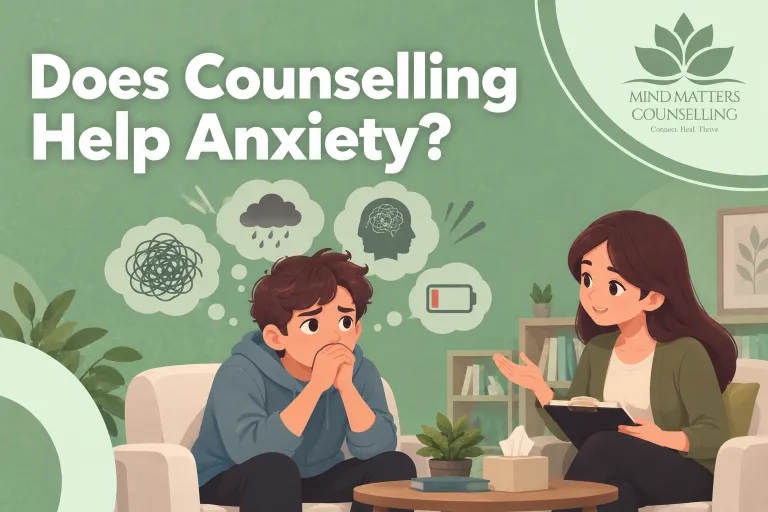
Generalized anxiety disorder, panic disorder, social anxiety disorder, and many other types of anxiety are some of the most common mental illnesses. However, they are also some of the most misunderstood. “Just calm down.” “Stop overthinking.” “You’re being irrational.” If only it were that easy. Anxiety is not a choice. If you suffer from anxiety, your amygdala is signaling false alarms to the fight or flight response in your brain when there is no true danger to respond to.
Anxiety often overlaps with ADHD and Autism. Understanding which symptoms stem from where can be tricky to figure out by yourself. When it comes to postpartum anxiety and depression, after pregnancy hormones surge to help you grow your baby, they quickly drop after birth which can cause anxiety to kick in strongly. You may feel alone, overwhelmed, and scared to say anything. Postpartum anxiety and depression are illnesses, not a reflection of your parenting abilities and should be treated as such.
The Overlap: Why ADHD, Autism, and Anxiety Often Appear Together
ADHD, Autism and Anxiety often occur together. Studies indicate that up to 50% of autistic individuals qualify for a diagnosis of ADHD. Anxiety disorders also occur in high numbers among individuals with both ADHD and autism. This overlap is not by chance – there are common neurological pathways that all three conditions affect. They can also stem from similar environmental causes and be influenced by genetics.
Many times it’s important to see how these conditions affect each other in order to make an accurate diagnosis and treat someone properly. For example, a person who comes in for individual counselling because of depression may learn that undiagnosed ADHD has been the underlying cause of years of low self-esteem, chronic underachievement, and burn-out. Once a proper assessment has been made the entire picture changes.
How Mind Matters Counsellling Helps You Navigate Neurodivergence
Living with ADHD, Autism, anxiety, or any combination of the three is hard enough. You shouldn’t have to face it alone. At Mind Matters Counsellling, located in New Westminster, our team of Registered Clinical Counsellors (RCC) will provide you with a safe, confidential, judgement-free space to figure out what’s going on for you. We won’t minimise your experiences or pathologize you.
Support available through individual counselling in New Westminster includes:
- Individual counselling for depression, anxiety, and related mood disorders
- Psychotherapy tailored to neurodivergent needs and communication styles
- Support for postpartum anxiety and depression in a non-judgmental space
- Skill-building for emotional regulation, executive function, and coping strategies
- Exploration of identity, self-worth, and relationships through a neurodiversity-affirming lens
- Guidance through life transitions, burnout, and sensory overwhelm
Whether you are newly diagnosed, long-suspected, or simply struggling without a clear label, the best psychotherapy counsellors in New Westminster will meet you exactly where you are — with curiosity, not judgment.
What to Expect From Neurodivergent-Affirming Therapy
Many neurodivergent individuals have had negative experiences with healthcare or mental health systems that didn’t truly understand their needs. Neurodivergent-affirming therapy is different. It starts from a position of acceptance and builds from there.
In affirming individual counselling sessions, you can expect:
- A therapist who listens without trying to “fix” your neurology
- Flexible communication including written reflection if verbal processing is difficult
- Psychoeducation that helps you understand your own brain patterns
- Practical tools grounded in evidence-based modalities such as CBT, DBT, and ACT
- A collaborative approach where you direct the pace and focus of sessions
- A space where stimming, blunt communication, or non-linear conversation is welcomed
A Special Note on Postpartum Anxiety and Depression
The honeymoon phase of new parenthood doesn’t last forever. For many folks, having a baby is one of the most emotionally exhausting experiences they will ever go through. Postpartum anxiety and depression impact about 1 in 5 new moms and many dads and nonbirthing parents, too. When unsupported, postpartum depression and anxiety can worsen over time and impact relationships with partners and your child.
Neurodivergent parents can experience additional difficulties during the postpartum period. Being overwhelmed by newborn sensory needs and experiences, changes in routine, hormone fluctuations, and inconsistent day-to-day activities of a newborn can all exacerbate ADHD, autistic burnout, and anxiety spirals.
Mind Matters provides supportive and informed care for those experiencing postpartum anxiety and depression. Seeking help is not failure, asking for support is one of the most courageous things you can do as a parent.
You Are Not Broken. You Are Wired Differently.
Your path to understanding your neurodivergent brain will not look linear. That is okay. There are people who want to walk with you on your journey. If you are starting to wonder if you have ADHD or autism. If you are looking for someone to talk to one on one about your depression with a sprinkle of anxiety. If you’re just trying to get through your days of postpartum anxiety and depression there is help and it can help you.
Your brain is not trying to hurt you. You have an amazing, complex brain that has been trying its best to function without the proper tools, vocabulary, and support system. Allow yourself the grace of seeking that support. It is not a weakness. It is intelligent.
Frequently Asked Questions
Q1: Can adults be diagnosed with ADHD or Autism?
Yes, absolutely. Many adults go undiagnosed throughout childhood, particularly women, girls, and individuals from marginalised communities. A late diagnosis can be deeply validating and opens the door to targeted support, including individual counselling in New Westminster tailored to adult neurodivergent needs.
Q2: Is individual counselling for depression different for neurodivergent individuals?
It can be. Neurodivergent-affirming therapists adjust their communication style, therapeutic tools, and session pacing to suit the individual. For example, someone with autism may benefit from more explicit social coaching, while someone with ADHD may need shorter, goal-focused sessions. A skilled RCC will collaborate with you to find the right approach.
Q3: What is postpartum anxiety and how is it different from “baby blues”?
Baby blues typically resolve within two weeks after birth and involve mild mood swings and tearfulness. Postpartum anxiety and depression are more persistent, more intense, and significantly impact daily functioning.
Q4: How do I know if I need the best psychotherapy counsellor in New Westminster or just self-help resources?
If your symptoms are affecting your work, relationships, sleep, or overall quality of life for more than two weeks, professional counselling is a worthwhile investment. Self-help tools such as books and apps can complement therapy but are rarely sufficient on their own for conditions like ADHD, ASD, or clinical anxiety.
Q5: Is therapy at Mind Matters Counselling confidential?
Yes. Mind Matters Counselling provides a fully confidential therapeutic environment. All Registered Clinical Counsellors are bound by ethical and professional standards of confidentiality.