The wedding is over.
The celebrations have settled.
The photos have been posted, liked, and saved.
You’re finally stepping into this new chapter of marriage.
And then a quiet moment happens.
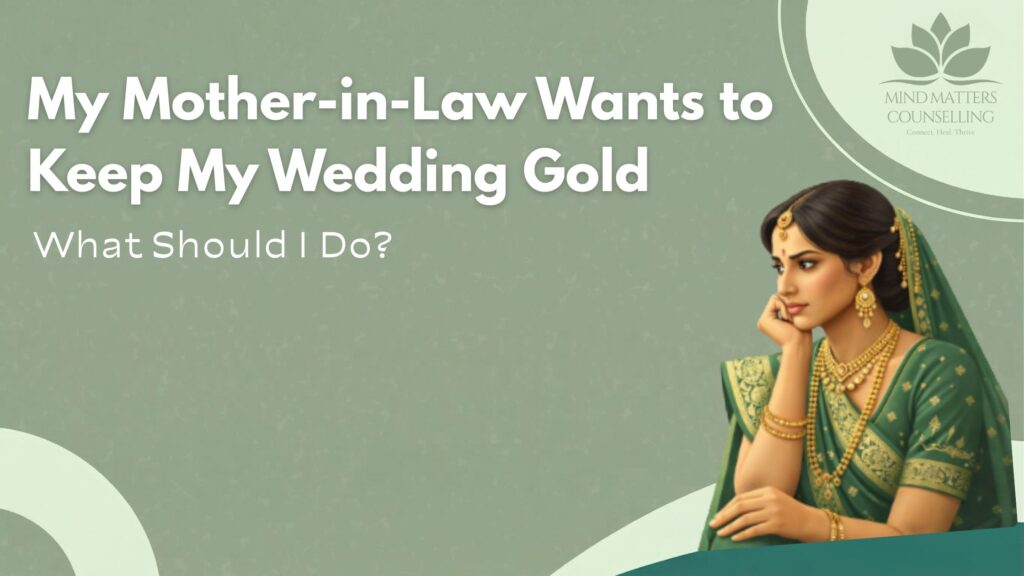
Someone, maybe your mother-in-law, maybe another family member, mentions keeping your wedding gold “safe.”
Maybe they say they’ll hold onto it in a locker.
Maybe they say it’s safer with them.
Maybe it’s presented as something that’s always been done this way.
And suddenly you feel something unexpected.
A knot in your stomach.
Because the conversation doesn’t feel simple.
When Gold Is More Than Just Jewelry
Gold has significant sentimental value within South Asian families. It is worn at weddings not just for adornment, but also to bestow wealth, honor tradition, and bless the couple’s new life together.
The jewelry worn by brides symbolizes many things. Throughout history, gold has been given to brides as a form of financial backup in case they ever needed something that was theirs.
That means when a bride receives gold during her wedding, it can represent several things at once:
- A gift from her parents
- A family tradition
- Cultural symbolism
- Personal financial security
- Something that belongs to her
So when someone else asks to hold onto it, the feelings that arise are often deeper than people expect.
It’s not always about the jewelry.
It’s about ownership, safety, and autonomy in a new family system.
Why Brides Feel Uncomfortable Giving Away Wedding Gold
To many South Asian wives this may feel confusing.
“I thought you loved our family.”
“Don’t worry Mama trusted me.”
“It’s for your own good.”
“We’ve always done it that way.”
“This stays in the family.”
And they probably don’t say any of these things meanly.
In fact they may say it warmly.
But on the inside you feel torn.
Between your cultural values of respecting your elders and keeping peace.
And your personal values of feeling comfortable and setting boundaries.
A lot of new marriages with in-law issues face this dichotomy.
Because when you get married you don’t just merge with another person.
You merge with another family system. With its culture, expectations, and hierarchies.
Why It Feels So Hard to Speak Up
Many women tell themselves:
“I don’t want to start problems.”
“What if they think I don’t trust them?”
“Maybe I should just go along with it.”
These thoughts often come from a desire to maintain harmony, especially early in marriage.
But the challenge is that staying silent about discomfort can sometimes create resentment later.
What begins as a small moment can grow into a larger emotional weight.
Because underneath the situation is often a deeper question:
Do I have space to express my needs in this new family?
How to Set Boundaries with In-Laws Respectfully
There isn’t one universal “right” way to handle this situation.
Different families have different customs.
Different couples have different agreements.
But sometimes a helpful starting point is clear and respectful communication.
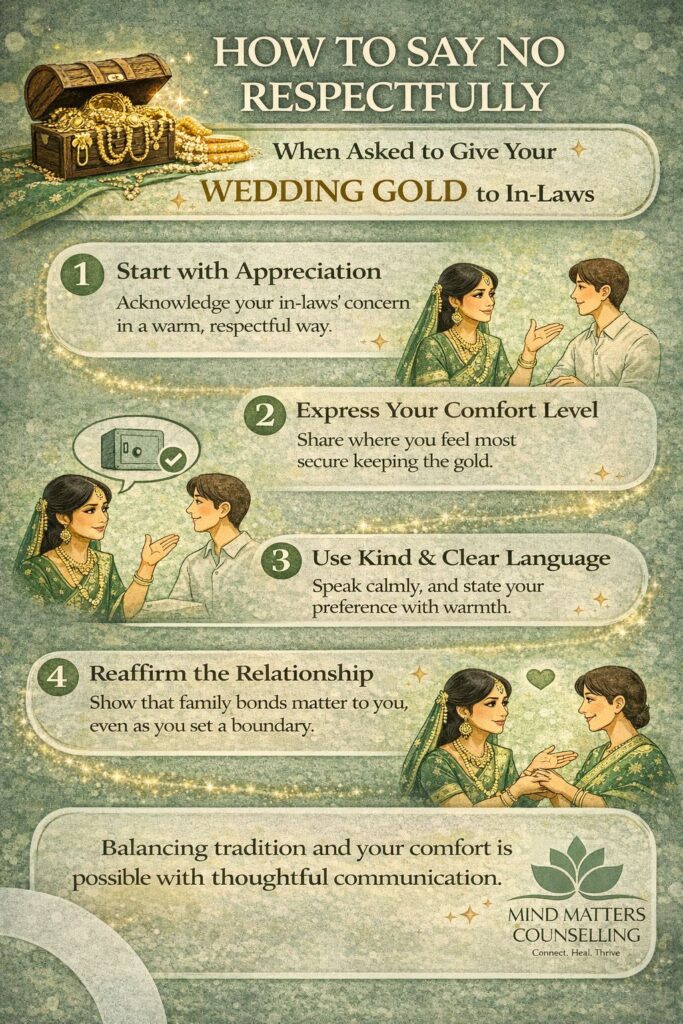
Rather than framing it as conflict, it can help to start with appreciation.
For example:
“I really appreciate that you want to keep it safe. I feel more comfortable keeping it with me or in our locker, but I truly value your concern.”
This kind of approach does a few important things:
- It acknowledges the other person’s intention
- It expresses your comfort level clearly
- It maintains respect while still honouring your boundary
Often, people are more open to hearing boundaries when they are expressed calmly and respectfully.
When Culture and Boundaries Intersect
Many South Asian couples are navigating an interesting intersection right now.
On one hand, there is deep respect for tradition and family hierarchy.
On the other hand, younger generations are learning to prioritize emotional safety, communication, and personal boundaries.
Neither side is inherently wrong.
But navigating the space between them can feel emotionally complex.
Especially when you are newly married and still learning your role within a new family system.
You’re Not Alone in This Situation
If you’ve ever felt unsure about how to navigate family expectations after marriage, you’re not alone.
Many couples quietly work through questions like:
- How do we respect our families while creating our own boundaries?
- How do we speak up without damaging relationships?
- How do we build a marriage that feels safe for both partners?
These conversations are rarely talked about openly, but they are incredibly common.
Final Thoughts
Maybe your wedding lasted a few days.
Your marriage will be going, and your relationships with your in-laws for years to come.
Understanding how to have these discussions with clarity, honesty and respect can create a powerful impact.
Whether you need help with setting boundaries, family expectations or cultural differences in your relationship, counselling can help.
Mind Matters Counsellling offers support for individuals and couples dealing with relationships, culture and family.
Ready to Navigate This with Support?
If navigating family expectations is creating stress in your relationship, you do not have to handle it alone.
Frequently Asked Questions
Why do in-laws want to keep wedding gold?
It is often framed as safety or tradition, but it can also reflect long-standing cultural norms and family expectations.
How do I say no without disrespecting my mother-in-law?
Using appreciation, calm communication, and clarity helps maintain respect while expressing your boundaries.
Is it wrong to feel uncomfortable about this?
No. Your feelings are valid. This situation involves autonomy, trust, and personal comfort.
Should my partner be involved in this conversation?
Yes. A supportive partner can help balance expectations and reinforce shared boundaries within the relationship.