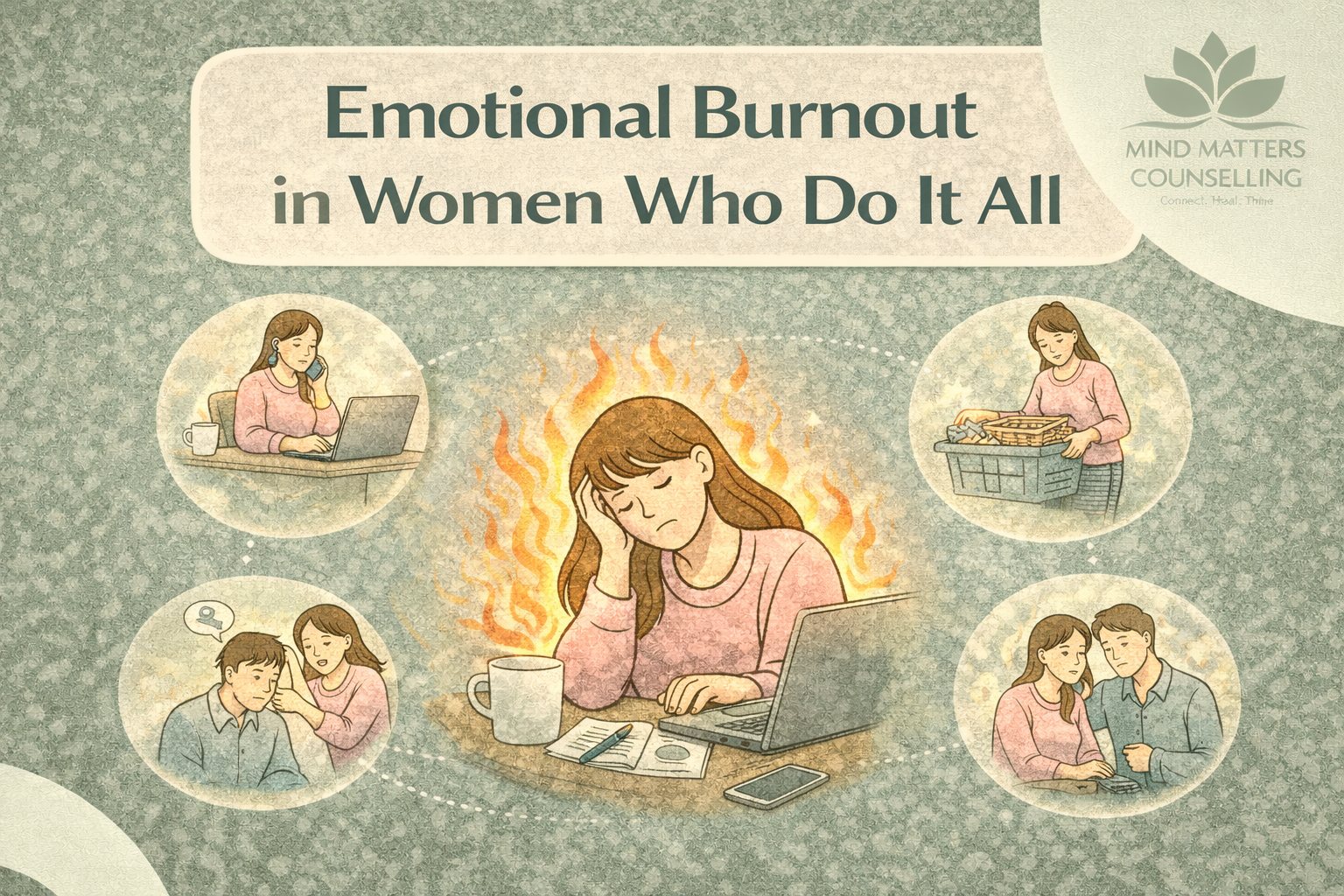
Emotional burnout doesn’t always feel dramatic. It’s not always quitting your job or crying every day. It often feels like putting one foot in front of the other and doing ‘fine’ on the outside, while you’re actually bone tired, short tempered, and emotionally numb on the inside.
When women come to see me for individual counselling here in BC, they often say something similar: they’re juggling careers, partners/family life, children, homemaking, somehow everything! But inside they feel depleted and numb, like they’ve lost touch with who they are.
If you’re a woman who prides yourself on “doing it all”, burnout doesn’t mean you can’t do something. Burnout may mean you’ve been doing too much for far too long.
What Is Emotional Burnout?
Burnout is more than temporary stress. It is a state of prolonged emotional, mental, and sometimes physical exhaustion caused by chronic over-responsibility and insufficient recovery.
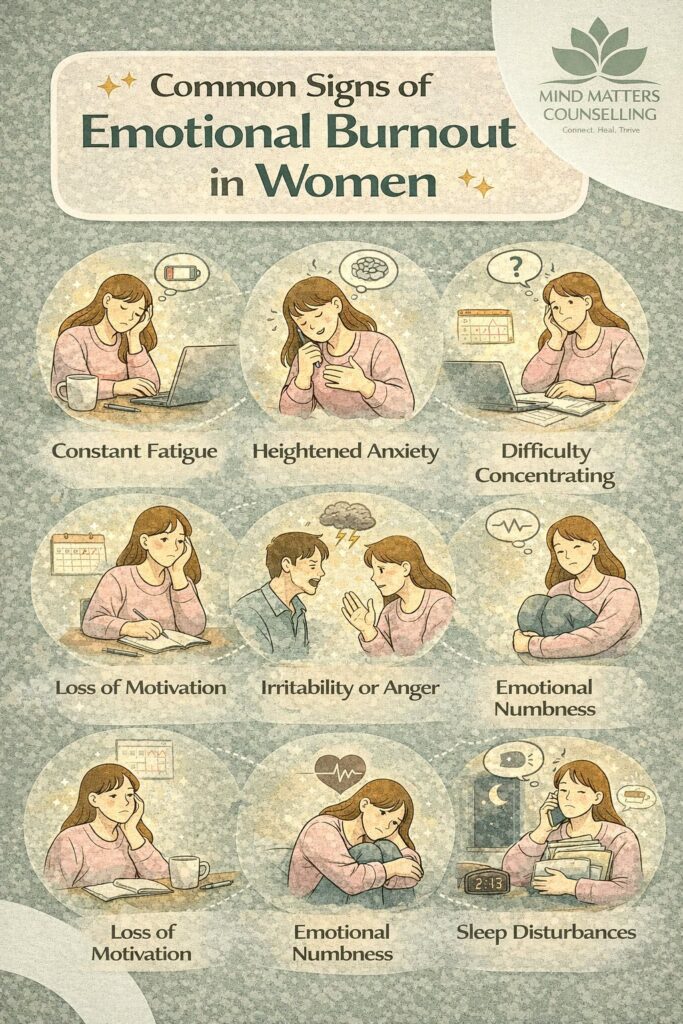
Emotional burnout often includes:
- Constant fatigue, even after rest
- Increased irritability or frustration
- Difficulty concentrating
- Feeling numb or detached
- Loss of motivation
- Heightened anxiety
- Low mood or early signs of depression
Successful women tend to make these symptoms normal. They think fatigue is just adulthood. The thing is when stress is chronic your nervous system can’t fully rest because it’s always on high alert.
This is where women start looking for anxiety & depression counselling or women’s individual therapy close to you.
Emotional Burnout vs Normal Stress
Stress is your body’s natural reaction to pressure. Emotional burnout occurs when stress is constant and recovery doesn’t occur.
Normal stress is often situational. You find yourself more stressed when it’s busy and feeling better when things calm down. Burnout stress sticks around. You might have less on your plate but your body and mind still feel on edge, drained, and overloaded.
With emotional burnout:
- Rest does not feel restorative
- Motivation does not return easily
- Emotional patience feels depleted
- The nervous system stays in a constant state of alert
This is why a weekend off or a short vacation often does not resolve burnout. The issue is not effort or resilience. It is prolonged overextension without adequate emotional recovery.
Read More: People Pleasing and Resentment
Why Women Who “Do It All” Are More Vulnerable
Women who manage multiple roles are particularly at risk for burnout. This includes professional responsibilities, caregiving, relationship maintenance, and emotional regulation within families.
Several patterns contribute to emotional burnout:
1. Overfunctioning in Relationships
Many women take on more than their share of emotional labour planning, organizing, anticipating needs, managing conflicts, and ensuring everything runs smoothly. Over time, this imbalance leads to resentment and exhaustion.
2. Perfectionism
High standards can be a strength, but perfectionism often creates internal pressure. If self-worth is tied to performance, mistakes feel threatening. This constant drive increases stress and reduces emotional flexibility.
3. Difficulty Delegating
Trusting others to complete tasks at work or at home can feel uncomfortable. Women who struggle with control may find it easier to do everything themselves, even when overwhelmed.
4. Cultural or Family Expectations
In many families, especially within collectivist or immigrant communities, women are expected to maintain harmony and support others. This adds another layer of emotional responsibility.
Over time, these patterns create chronic depletion.
The Link Between Burnout, Anxiety, and Depression
Burnout rarely stays contained. When emotional resources are consistently drained, mental health begins to suffer.
Chronic stress can contribute to:
- Heightened anxiety
- Sleep disturbances
- Mood instability
- Feelings of hopelessness
- Withdrawal from relationships
Women often come into treatment for high functioning anxiety only to find out they are emotionally burned out.
Burnout disguises itself as “just stress”. However chronic stress can turn into anxiety/depression that needs treatment.
Signs You May Be Experiencing Emotional Burnout
You may relate to emotional burnout if:
- You feel resentful but struggle to express it
- You fantasize about escaping responsibilities
- Small tasks feel overwhelming
- You are emotionally reactive at home but composed at work
- You no longer enjoy activities that once felt fulfilling
- You feel guilty resting
If these experiences resonate, individual counselling can help you identify the root causes and develop sustainable changes.
How Individual Counselling Helps With Burnout
Individual counselling in New Westminster provides space to slow down and assess what has been contributing to emotional depletion.
Therapy for burnout often includes:
Identifying Overfunctioning Patterns
Understanding where and why you take on excessive responsibility.
Exploring Attachment and Identity
Examining whether your sense of worth is connected to being the “reliable one.”
Building Boundaries
Learning to set limits without overwhelming guilt.
Nervous System Regulation
Developing tools to calm chronic stress responses.
Restructuring Perfectionistic Thinking
Challenging rigid beliefs around productivity and worth.
Through therapy, clients often recognize that burnout is not a personal weakness, it is a signal.
Burnout in Romantic Relationships
Burnout can often show up in couples. If one person is shouldering more planning or emotional labour or decision-making resentment grows. Women often seek counselling because they feel unsupported or emotionally isolated in their relationships.
Sometimes we start with individual therapy to sort things out before coming in together as a couple. If we can nip burnout in the relationship in the bud you won’t feel so disconnected.
Emotional Burnout and High Achievement
High-achieving women are especially vulnerable because external success can mask internal depletion.
From the outside:
- You are competent.
- You are organized.
- You meet expectations.
Internally:
- You feel stretched thin.
- You fear dropping the ball.
- You rarely feel “off duty.”
Individual counselling helps separate identity from productivity, allowing ambition to exist without constant self-pressure.
The Physical Symptoms of Emotional Burnout
Emotional burnout does not only affect thoughts and feelings. It often shows up physically, especially when stress has been ongoing for months or years.
Common physical signs include:
- Chronic fatigue or low energy
- Headaches, jaw tension, or muscle pain
- Digestive discomfort or appetite changes
- Frequent illness or lowered immunity
- Sleep difficulties or non restorative sleep
- Hormonal or menstrual changes
These symptoms are actually very real physical manifestations of chronic stress. Most women ignore them or bulldoze forward thinking their body should be able to handle it. Doing this will eventually compound the emotional fatigue you’re feeling and may lead you to anxiety or depression. The first step to turning things around is acknowledging that burnout is affecting you physically.
Therapy for Emotional Burnout in New Westminster BC
At Mind Matters Counsellling, we also provide couple counselling in New Westminster for women experiencing emotional burnout, anxiety, and relational stress. Our approach integrates attachment-based therapy, CBT, and emotionally focused techniques to help clients restore balance without sacrificing their goals.
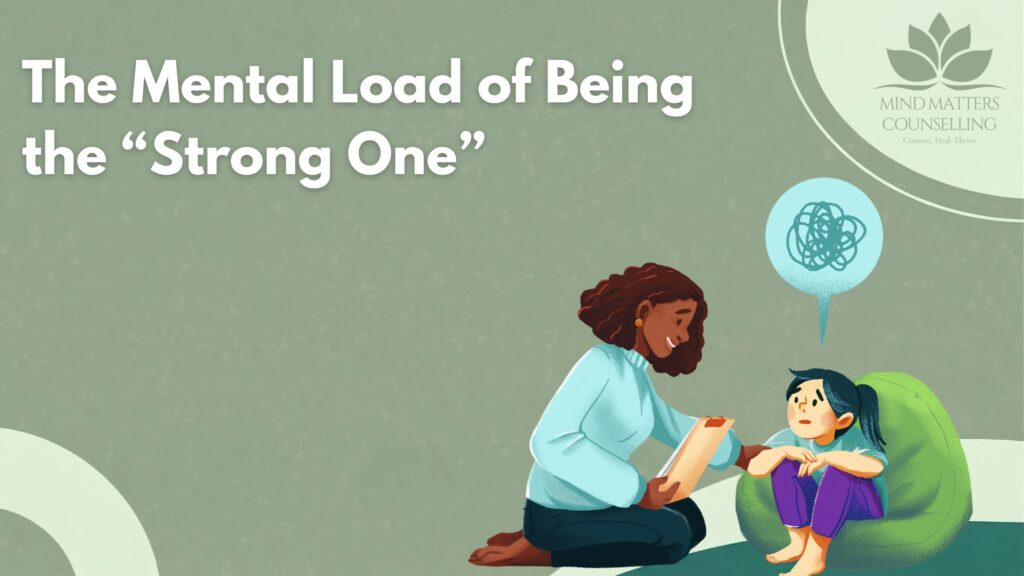
Burnout is not a sign that you are incapable. It is often a sign that you have been strong for too long without adequate support.
If you are feeling emotionally depleted, therapy can help you rebuild clarity, energy, and healthier boundaries.
You do not have to continue carrying everything alone.
Book a session with Mind Matters Counsellling.
Frequently Asked Questions
How to recover from emotional burnout?
Recovery from emotional burnout begins by reducing chronic over responsibility and allowing the nervous system to move out of constant alert. This includes setting healthier boundaries, addressing perfectionistic patterns, prioritising emotional rest, and rebuilding energy gradually.
What does mental burnout feel like in women?
Mental burnout in women often feels like constant exhaustion paired with emotional irritability, mental fog, and a sense of being overwhelmed by even small tasks. Many women describe feeling disconnected from joy, emotionally reactive at home, and pressured to keep functioning despite feeling depleted.
How to cure emotional and mental burnout in women?
There is no instant cure for emotional and mental burnout. Healing involves understanding why burnout developed, changing unsustainable patterns, and restoring balance over time. Therapy can support women in addressing overfunctioning, building boundaries, regulating stress responses, and separating self worth from productivity.
Do hobbies prevent emotional burnout?
Hobbies can support emotional wellbeing, but they do not prevent burnout if underlying stressors remain unchanged. When women are emotionally overextended, hobbies may feel like another obligation rather than a source of rest. Burnout prevention requires meaningful recovery, emotional boundaries, and reduced pressure, not simply adding more activities to an already full schedule.