When Being Capable Becomes Exhausting: Understanding Emotional Burnout in Women
You are the person everyone calls when something goes wrong.
The one who remembers birthdays, appointments, deadlines, and family responsibilities.
The one who checks in on everyone else.
The one people describe as:
- “She can handle anything.”
- “You’re so strong.”
- “I don’t know what we would do without you.”
And maybe, for a long time, you were proud of that.
Being dependable became part of who you were.
But lately, something feels different.
You feel tired in a way sleep does not fix.
You feel frustrated when people ask you for one more thing.
You feel guilty for needing help.
You feel pleasure and resentment building, but you also feel ashamed for feeling that way.
You may find yourself thinking:
- “Why does everyone depend on me?”
- “Why do I feel like I’m carrying everything?”
- “Why does nobody notice how exhausted I am?”
This experience is more common than many women realize.
At Mind Matters Counselling, we support women in New Westminster, Burnaby, Surrey, and across British Columbia who are navigating emotional exhaustion, anxiety counselling, burnout, perfectionism, relationship challenges, and the invisible pressure of always being the strong one.
What Is the Mental Load?
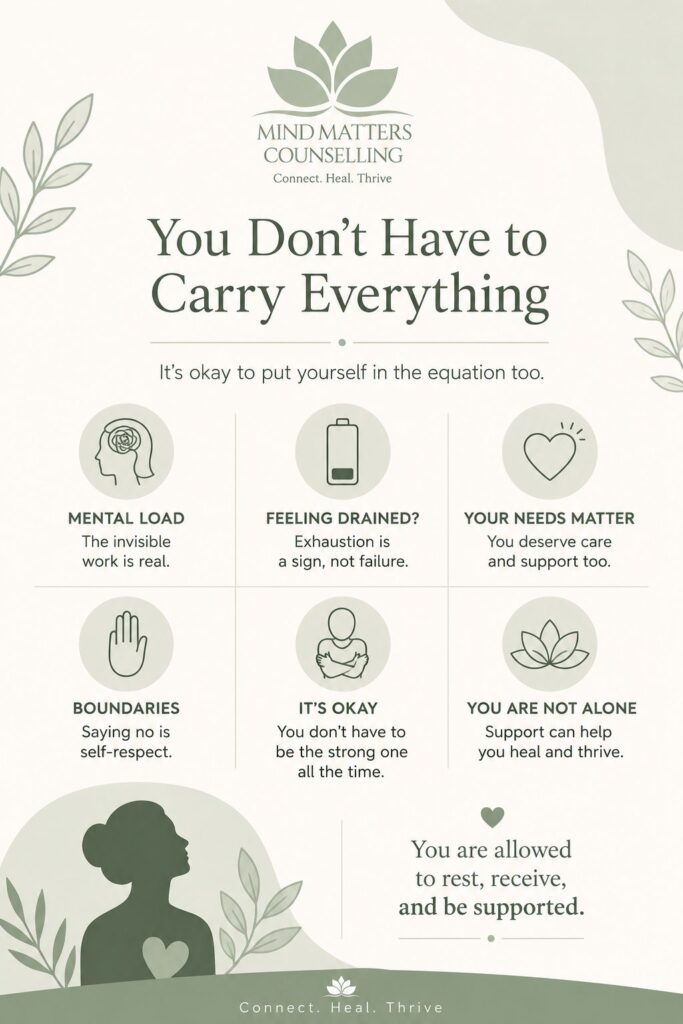
The mental load is the invisible responsibility of managing, remembering, anticipating, and organizing everything that keeps life running.
It is not just doing tasks.
It is thinking about the tasks before they happen.
For example, it is not only cooking dinner.
It is also:
- Planning meals.
- Noticing groceries are running low.
- Remembering everyone’s preferences.
- Thinking about tomorrow’s schedule.
- Making sure everyone is taken care of.
It is not only caring for family.
It is constantly monitoring:
- How is everyone feeling?
- Does anyone need support?
- Is there conflict happening?
- Did I forget something important?
The mental load is the constant background process of managing life.
For many women, this responsibility becomes invisible because they make it look effortless.
Why Are So Many Women the “Strong One”?
Many women do not wake up one day and decide:
“I will carry everyone else’s emotions.”
It often develops over time.
You may have learned early that being responsible brought approval.
Maybe you were the:
- Mature child.
- Helpful daughter.
- Peacekeeper.
- High achiever.
- Caregiver.
- A person everyone trusted.
You learned:
- “If I handle things, things stay calm.”
- “If I do not need anything, I will not burden anyone.”
- “If I can keep everyone happy, everything will be okay.”
These patterns can be especially common among women who grew up in families where responsibility, sacrifice, and caring for others were highly valued.
The Emotional Cost of Always Being Capable
Being capable is a strength.
But when capability becomes your identity, it can become exhausting.
Many women who appear highly functional experience:
Emotional Exhaustion
You constantly give but rarely feel replenished.
Resentment
You start feeling frustrated that others do not notice how much you do.
Difficulty Asking for Help
Even when you need support, you struggle to admit it.
Feeling Invisible
People see what you do, but they do not always see what it costs you.
Losing Touch With Yourself
You may find yourself wondering:
“Who am I outside of my responsibilities?”
When Strength Becomes a Survival Strategy
For some women, being “strong” was not just a personality trait.
It was something they learned because they had to.
Maybe you grew up needing to:
- Manage family emotions.
- Be independent early.
- Support others.
- Avoid creating problems.
- Achieve to feel valued.
Over time, your nervous system learned:
- “I need to stay in control.”
- “I cannot fall apart.”
- “I need to figure things out myself.”
This can create a constant state of pressure where relaxing feels uncomfortable.
Even when everything is okay, your brain may still be preparing for the next problem.
The Connection Between the Mental Load and Anxiety
Carrying too much responsibility for too long can contribute to anxiety.
You may notice:
- Constant overthinking.
- Difficulty relaxing.
- Feeling responsible for everyone’s happiness.
- Worrying about disappointing people.
- Trouble sleeping because your mind will not stop.
- Feeling guilty when you prioritize yourself.
Many women think:
“I just need to become more organized.”
But sometimes the issue is not organization.
Sometimes the issue is that you are carrying more than one person was ever meant to carry.
Why Women Struggle to Set Boundaries
Many women understand intellectually that boundaries are healthy.
But emotionally burnout, boundaries can feel uncomfortable.
You may think:
- “If I say no, will they think I do not care?”
- “If I stop helping, will I disappoint them?”
- “What if they get upset?”
For women who have built their identity around being dependable, boundaries can feel like rejection.
But boundaries are not about loving people less.
They are about including yourself in the equation.
The “Strong Woman” Role in South Asian Communities
Many South Asian women experience additional pressure connected to cultural expectations.
There can be strong values around:
- Family responsibility.
- Sacrifice.
- Respect.
- Maintaining harmony.
- Putting others first.
These values can create beautiful connections.
However, they can also create pressure to:
- Hide struggles.
- Avoid asking for help.
- Prioritize family needs over personal needs.
- Appear grateful and strong at all times.
Many women quietly carry:
- Family expectations.
- Career responsibilities.
- Relationship responsibilities.
- Caregiving roles.
- Emotional responsibilities.
While appearing like they have everything together.
You Are Allowed to Need Support Too
Being strong does not mean:
- Never struggling.
- Never needing help.
- Always knowing what to do.
- Carrying everything alone.
True strength also includes:
- Recognizing your limits.
- Expressing your needs.
- Allowing others to support you.
- Creating healthier relationships.
You do not have to collapse before you deserve care.
How Therapy Can Help Women Who Feel Exhausted From Being Strong
At Mind Matters Counselling, we support women experiencing:
- Emotional burnout.
- Anxiety.
- Perfectionism.
- People pleasing.
- Relationship stress.
- Difficulty setting boundaries.
- Identity struggles.
- Family pressure.
Therapy can help you explore:
- Why did I become the person who carries everything?
- Why does asking for help feel so difficult?
- Why do I feel guilty prioritizing myself?
- How can I build relationships where I am supported too?
Our therapists provide compassionate and culturally informed counselling in New Westminster, Burnaby, Surrey, and throughout British Columbia.
You Don’t Have to Carry Everything Alone
Being the strong one may have helped you survive.
But you deserve relationships where you can also be supported.
You deserve space where you do not have to perform, achieve, or hold everything together.
You are allowed to be cared for too.
Mind Matters Counselling provides therapy for women experiencing burnout, anxiety, emotional exhaustion, and relationship challenges in New Westminster, Burnaby, Surrey, and across British Columbia.
Book a session today and begin creating a life where you are not only the person who gives support, you are also someone who receives it.
Frequently Asked Questions
Why do I feel exhausted even though I am managing everything?
Many women experience emotional exhaustion from constantly carrying responsibilities, anticipating needs, and managing other people’s emotions.
Is resentment a sign that something is wrong with me?
No. Resentment is often a signal that your needs, boundaries, or emotions have been overlooked for too long.
Why is it hard for me to ask for help?
Many people learn early that being independent and helpful is valued. Asking for help can feel uncomfortable when you are used to being the caregiver.
Can therapy help with burnout and emotional exhaustion?
Yes. Therapy can help you understand the patterns behind burnout, develop boundaries, and create healthier ways of relating to yourself and others.