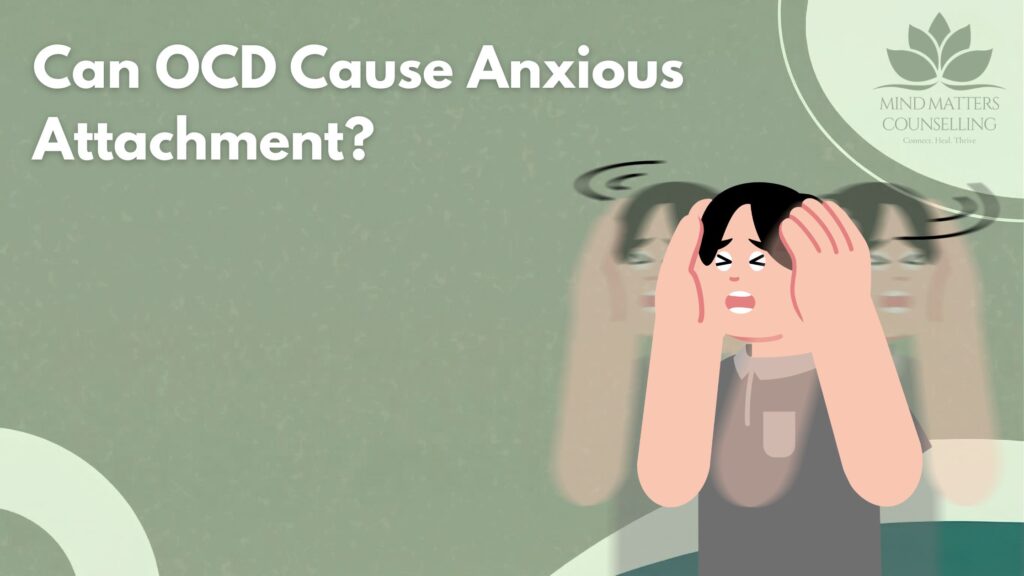
Relationships can be one of the greatest sources of joy in life, but for many women they can also become a constant source of worry, self-doubt, and emotional exhaustion. If you find yourself over-analyzing text messages, afraid of being abandoned even in stable relationships, or feeling like you need constant reassurance from a partner, you may be experiencing what psychologists call anxious attachment.
Anxious attachment is not a personality defect, nor are you “too much.” It’s a long-standing emotional pattern that is built over time and can definitely be worked through with the right support and tools.
This guide will help you understand the true meaning of anxious attachment, why it is more visible in females, what the signs are to look out for and how professional Individual Counselling can help your healing journey.
What Is Anxious Attachment?
Attachment theory dates back to the 1960s when psychologist John Bowlby theorized that the emotional bonds we form with our first caregivers in childhood shape how we interact with others throughout our lives. If these early bonds are inconsistent, unpredictable, or emotionally unavailable, the child may develop what is called anxious attachment.
Anxious attachment styles often desire closeness and deep connection but also live in fear of losing it. They may need frequent reassurance, become hyperaware of changes in a partner’s behavior and struggle to feel secure unless they get consistent emotional validation.
There are four main attachment styles recognized in psychology:
- Secure – comfortable with intimacy and independence
- Anxious (also called Preoccupied) – craves closeness but fears abandonment
- Avoidant (Dismissive) – values independence, tends to suppress emotional needs
- Disorganized (Fearful-Avoidant) – oscillates between wanting and fearing closeness
This article focuses specifically on the anxious attachment style and how it presents in women.
Why Does Anxious Attachment Show Up in Women?
Anyone of any gender can experience anxious attachment, but research and clinical experience suggest this might be more pronounced or more easily observable in women. This isn’t all biological, social conditioning plays a huge role.
Women are socialised in contexts that value and encourage emotional expression and relational orientation. This can be a strength, but it also means that women might internalize the message that their value is in their relationships. When things are rocky in a relationship, the emotional toll can be huge and all-consuming.
Common Root Causes of Anxious Attachment in Women
- Inconsistent parenting: A parent who is sometimes warm and nurturing but at other times emotionally unavailable or unpredictable can leave a child in a constant state of emotional alertness.
- Childhood trauma or neglect: Experiences of emotional neglect, abuse, or chronic instability can wire the nervous system to expect rejection.
- Early loss or abandonment: Losing a caregiver through death, divorce, or emotional withdrawal can create deep fears of being left.
- Cultural and societal messaging: Social narratives that tie a woman’s worth to romantic relationships or motherhood can amplify attachment fears.
- Previous relationship trauma: Being cheated on, gaslit, or emotionally abandoned in adult relationships can reinforce anxious patterns even in women who did not start out with insecure attachment.
Understanding the origin of these patterns is often the first step in healing, something that therapists at Mind Matters Counselling work through carefully and compassionately with their clients.
Signs of Anxious Attachment in Women
Anxious attachment rarely announces itself clearly. Instead, it weaves itself into everyday thoughts and behaviors, often disguised as love, care, or concern.
Emotional and Relational Signs
- Constantly seeking reassurance that your partner loves you or is not upset with you
- Feeling intense anxiety when your partner does not respond to messages quickly
- Overanalyzing your partner’s tone, words, or body language for signs of rejection
- Difficulty trusting your partner even when there is no evidence of dishonesty
- Strong fear of being abandoned or left, even in stable, committed relationships
- Becoming emotionally dysregulated (tearful, panicky, or shut down) after minor conflict
- Feeling “too much” or like a burden for having emotional needs
Behavioral Signs
- Over-apologizing or taking blame to prevent conflict
- Staying in unhealthy relationships due to fear of being alone
- Suppressing your own needs to avoid pushing people away
- People-pleasing at the expense of your own boundaries and identity
- Becoming emotionally dependent on your partner for your sense of self-worth
- Experiencing intense jealousy or possessiveness that you recognize as disproportionate
These patterns are not signs of weakness. They are survival strategies that once served a purpose, and they can be unlearned.
The Link Between Anxious Attachment and Emotional Burnout in Women
One of the less-discussed consequences of living with anxious attachment is emotional burnout. When a woman is constantly monitoring a relationship, managing her partner’s moods, suppressing her own needs, and living in fear of abandonment, she is expending an enormous amount of emotional energy.
Emotional Burnout in Women with Anxious Attachment Often Looks Like:
- Feeling chronically exhausted without a clear physical reason
- Emotional numbness or disconnection from things you once enjoyed
- Difficulty being present at work, with friends, or in other areas of life
- Increased anxiety, irritability, or depressive episodes
- A growing sense of resentment, emptiness, or helplessness in relationships
If any of this sounds familiar, it is a signal worth paying attention to. Emotional burnout is not a personal failing, it is the result of running on empty for too long without the right support.
How Mind Matters Counselling Can Help
It can seem so daunting to navigate anxious attachment by yourself. Recognizing the patterns is one thing, but altering the ingrained beliefs and behaviors behind those patterns takes consistent, guided support.
Mind Matters Counselling is a team of Registered Clinical Counsellors (RCC) who provide a safe, confidential and non-judgmental space to help you work through what you are dealing with, develop practical skills to cope with life’s challenges and restore emotional balance. Whether you are struggling with relationship anxiety, past trauma or emotional burn out, their approach is based on clinical expertise and human care.
Individual Counselling for Anxious Attachment
Individual Counselling is often the starting point for women who want to understand and shift their attachment patterns. In one-on-one sessions, a counsellor can help you:
- Identify the root causes of your anxious attachment style
- Challenge core beliefs such as “I am not worthy of love” or “people always leave”
- Develop emotional regulation skills to manage anxiety before it escalates
- Build a stronger, more secure sense of self that does not depend on external validation
- Work through past trauma that may be driving present-day relationship fears
Couples Counselling for Anxious Attachment Dynamics
When anxious attachment is affecting your relationship, Couples Counselling can provide a structured space for both partners to understand each other more deeply.
It helps couples:
- Communicate needs and fears without triggering defensiveness or withdrawal
- Break the anxious-avoidant cycle that many couples find themselves stuck in
- Build trust and emotional safety within the relationship
- Learn to respond to each other’s attachment needs with empathy rather than frustration
- Reconnect with the partnership after prolonged conflict or emotional distance
Whether you are seeking support individually or as a couple, the counsellors at Mind Matters Counselling are equipped to meet you where you are and guide you toward meaningful, lasting change.
Healing Anxious Attachment: What the Journey Looks Like
Healing is not a linear process and it doesn’t happen overnight. But it is totally doable. Many women who make the commitment to understand and work through their attachment patterns find there is a slow but deep change from feeling dominated by relationship anxiety to feeling truly secure in themselves.
Some Key Elements of Healing Include:
- Self-awareness: Learning to notice anxious thoughts and behaviors without judgment
- Nervous system regulation: Practices such as breathwork, mindfulness, and somatic techniques to calm the body’s stress response
- Reparenting: Offering yourself the consistency, warmth, and safety that may not have been present in childhood
- Boundary-setting: Learning to identify and express your needs without fear of abandonment
- Secure relationship experiences: Whether with a partner, friends, or a therapist, healing often happens within safe relational experiences
It also helps to know that healing anxious attachment is not about becoming emotionally detached or independent to the point of not needing others. It is about finding the balance, being able to connect deeply while also feeling whole within yourself.
Final Thoughts
Anxious attachment can turn love into a rollercoaster of emotion, thrilling, exhausting, and terrifying all at once. But it makes all the difference knowing where these patterns come from, and getting the right support.
You deserve relationships that feel safe. With or without the constant reassurance, you should feel safe to be who you are. And you deserve support from people who truly understand the complexity of what you are navigating.
If you’re ready to take that first step, Mind Matters Counsellling provides a compassionate, evidence-informed space to start. Click here to learn more and to book a session with one of their Registered Clinical Counsellors.
Frequently Asked Questions
1. Can anxious attachment be cured?
Anxious attachment is not a condition that needs to be “cured”, it is an attachment pattern that can be understood, worked through, and significantly shifted with the right support. Many people move toward a much more secure attachment style through therapy and self-awareness work.
2. Is anxious attachment more common in women?
Research does not conclusively show that women have higher rates of anxious attachment than men. However, social conditioning, cultural expectations around relationships, and gendered emotional norms can make anxious attachment patterns more visible or more openly expressed in women.
3. What is the difference between Individual Counselling and Couples Counselling for attachment issues?
Individual Counselling focuses on your personal history, beliefs, and emotional patterns. Couples Counselling involves both partners and focuses on how attachment styles interact within the relationship. Both can be valuable, and some people benefit from doing both simultaneously or sequentially.
4. How is Emotional Burnout in Women connected to anxious attachment?
Women with anxious attachment often expend significant emotional energy monitoring relationships, suppressing their needs, and managing fear of abandonment. Over time, this can lead to emotional burnout, a state of chronic exhaustion, numbness, and overwhelm. Addressing the attachment root causes is often essential to recovering from burnout.
5. How do I know if I need Individual Counselling or Couples Counselling?
If your relationship anxiety feels deeply personal and rooted in your history, Individual Counselling is often a strong starting point. If the patterns are causing regular conflict or disconnect between you and a partner, Couples Counselling may be helpful, either alongside or after individual work. A counsellor can help you figure out the right approach for your situation.