The Hidden Emotional Side of Becoming a Mother
Everyone tells you:
“Enjoy every moment. These days go by quickly.”
But what happens when you are sitting there holding your baby, feeling overwhelmed, exhausted, anxious, and wondering:
“Why don’t I feel like myself anymore?”
Motherhood is a profound life transition. While it can bring love and connection, it can also bring unexpected emotional challenges that many mothers are not prepared for.
You may find yourself:
- constantly worrying about your baby’s safety
- feeling anxious even when everything is okay
- crying more than usual
- feeling disconnected from yourself
- feeling guilty for struggling
- wondering why motherhood feels harder than you imagined
If this sounds familiar, you are not alone.
At Mind Matters Counselling, we provide postpartum counselling in New Westminster, Burnaby, Surrey, and throughout British Columbia to support mothers navigating postpartum anxiety, postpartum depression, identity changes, relationship struggles, and the emotional adjustment of becoming a parent.
Your Body Recovered, But Your Mind Is Still Struggling
After childbirth, most conversations focus on physical recovery:
- healing from delivery
- feeding schedules
- sleep routines
- baby milestones
But emotional recovery matters too.
Many mothers experience a nervous system that feels constantly activated.
You may notice:
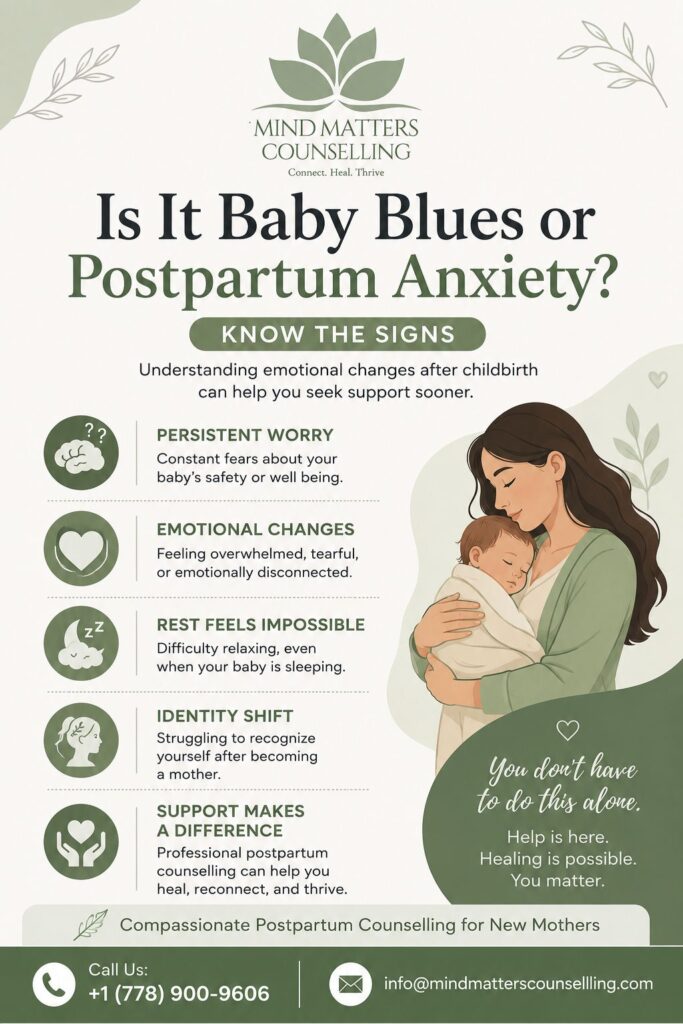
Constant Worry
Your mind repeatedly asks:
“Is my baby okay?”
“Did I do something wrong?”
“What if something happens?”
Difficulty Resting
Even when someone else is caring for your baby, your brain may not switch off.
Feeling Like You Lost Yourself
You may miss:
- your independence
- your old routines
- your identity before motherhood
This does not mean you regret becoming a mother.
It means you are adjusting to a major life transition.
Postpartum Anxiety: When Worry Takes Over
Some level of worry is normal after having a baby.
But postpartum anxiety can feel consuming.
Signs may include:
- racing thoughts
- excessive fear
- checking behaviours
- difficulty sleeping because of worry
- needing constant reassurance
- feeling like something bad will happen
Many mothers say:
“I know my thoughts aren’t logical, but I can’t stop them.”
This is a common experience with anxiety.
Postpartum Depression: More Than Feeling Sad
Postpartum depression is often misunderstood.
It is not simply being tired or having a difficult day.
Symptoms may include:
- ongoing sadness
- feeling hopeless
- emotional numbness
- loss of interest
- guilt and shame
- feeling disconnected from your baby
- feeling like you are failing as a mother
A common misconception is:
“If I love my baby, I can’t have postpartum depression.”
This is not true.
You can deeply love your child and still need emotional support.
Why New Mothers Struggle to Ask for Help
Many mothers delay seeking support because they think:
“Other moms handle this better.”
“I should be grateful.”
“I don’t want people to think I can’t handle motherhood.”
For many women, especially within South Asian and immigrant communities, there can be additional pressure to:
- be strong
- adjust quietly
- prioritize family needs
- avoid appearing overwhelmed
But asking for support is not a weakness.
It is an act of care.
How Postpartum Counselling Can Help
At Mind Matters Counselling, postpartum therapy in women provides a safe space to explore:
Anxiety and Overthinking
Learn tools to manage intrusive thoughts, fears, and constant worry.
Identity Changes
Motherhood changes your relationship with yourself.
Therapy can help you reconnect with who you are beyond being a parent.
Mom Guilt
Many mothers carry unrealistic expectations about what they “should” be doing.
Counselling helps create more self compassion.
Relationship Changes After Baby
A baby changes a relationship dynamic.
Therapy can help couples navigate:
- communication struggles
- emotional distance
- unequal responsibilities
- loss of connection
Why Choose Mind Matters Counselling for Postpartum Support?
At Mind Matters Counselling, we understand that postpartum mental health is influenced by more than just symptoms.
We consider:
- your personal story
- cultural background
- family relationships
- identity
- motherhood expectations
Our therapists provide compassionate, culturally informed counselling for mothers in:
- New Westminster
- Burnaby
- Surrey
- surrounding BC communities
How to Start Postpartum Counselling
Starting therapy does not have to feel overwhelming.
The process is simple:
Step 1: Reach Out
Contact Mind Matters Counselling to share what support you are looking for.
Step 2: Connect With a Therapist
We help match you with a therapist who understands your concerns.
Step 3: Begin Your Healing Journey
Together, you will work on understanding your emotions, building coping skills, and feeling more like yourself again.
You Don’t Have to Struggle Alone
Motherhood is a huge transition.
You are allowed to need support.
You are allowed to admit that things feel harder than expected.
And you are allowed to take care of yourself while caring for your baby.
Mind Matters Counselling provides postpartum counselling for mothers experiencing anxiety, depression, overwhelm, and emotional changes after childbirth.
Frequently Asked Questions
How do I know if I have postpartum anxiety or normal new mom stress?
Some stress is expected after having a baby. However, if worry feels constant, overwhelming, or prevents you from enjoying daily life, postpartum anxiety counselling may help.
How long does postpartum depression last?
Every person’s experience is different. Many people improve with proper support, therapy, and treatment.
Can postpartum counselling help with mom guilt?
Yes. Therapy can help you challenge unrealistic expectations and develop healthier self compassion.
Do you provide postpartum counselling near me?
Mind Matters Counselling provides postpartum counselling in New Westminster, Burnaby, Surrey, and online throughout BC.