The Invisible Pressure of Being “The Good Daughter” in South Asian Desi Families
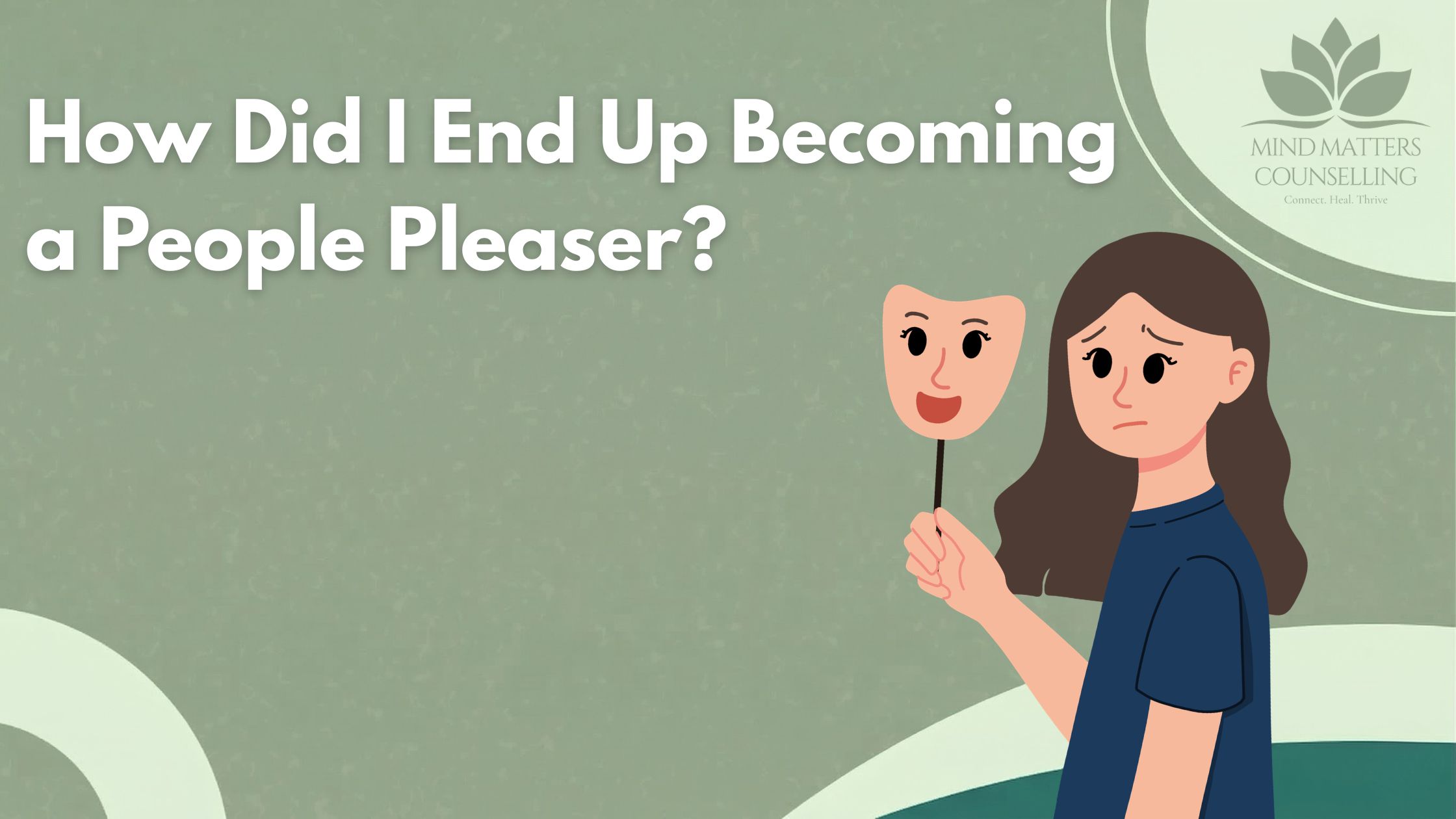
Many women like me didn’t notice when they were becoming people pleasers at first.
Honestly even I just thought I was being a good daughter being a responsible, caring, mature, dependable or basically just a “good” daughter.
I was the one who kept the peace. The one who noticed everyone else’s emotions before my own. The one who could sense tension in a room within seconds and immediately adjust myself to make things easier for everyone else.
Especially as the eldest daughter in a South Asian household, it often felt like my role wasn’t just to exist, it was to hold things together.
And somewhere along the way, I stopped asking myself a very important question:
What do I actually want?
At Mind Matters Counselling, we work with many women in Burnaby, Surrey, New Westminster, and across BC who struggle with people pleasing and resentment, perfectionism, anxiety, guilt, and boundaries especially within South Asian family dynamics.
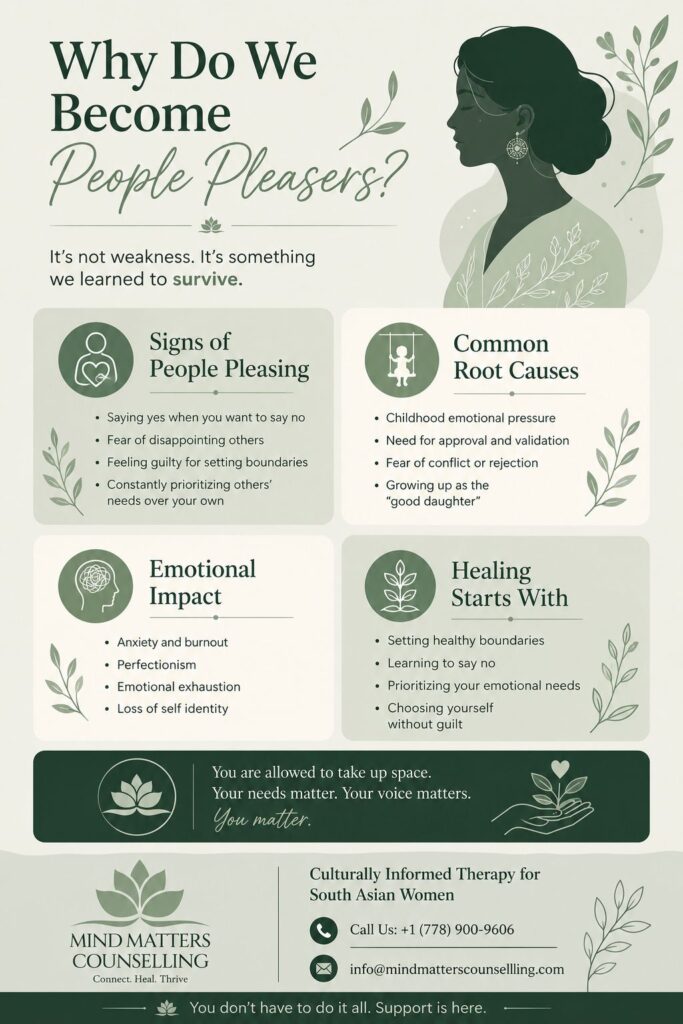
Many times I get asked this question “ I Don’t Want to People Please but Why Do I Still Do It?”
This is one of the most common things women say in therapy.
Because logically, you may know:
- you’re exhausted
- you’re resentful
- you need boundaries
- you can’t keep carrying everyone emotionally
And yet…
The moment you’re around family again, something shifts.
You automatically:
- say yes when you want to say no
- over-explain yourself
- avoid disappointing people
- prioritize everyone else’s comfort
- feel guilty for setting boundaries
- shrink your own needs
It can feel almost automatic, to a point where you feel like your body is giving up on you and you just get pushed into making sure you attend to everyone’s needs but yours.
That’s because pleasing people is often not just a habit but it’s a survival strategy.
But before you read more it’s important to understand The Elder Daughter Role No One Talks About
In many South Asian homes, elder daughters quietly become emotional caretakers very early in life.
You may have learned to:
- mediate family conflict
- emotionally support parents
- help raise siblings
- avoid “burdening” others with your feelings
- be mature beyond your age
- stay agreeable and accommodating
You became the dependable one.
The “strong” one.
The daughter who doesn’t create problems.
And while these qualities may have helped you survive your environment, they can later create deep anxiety, perfectionism, burnout, and difficulty knowing where you end and everyone else begins.
Why Boundaries Feel So Hard in South Asian Families
Many women feel intense guilt around boundaries because boundaries were never modeled as normal.
Instead, love may have looked like:
- sacrifice
- over-involvement
- obligation
- emotional dependency
- constantly adjusting yourself for others
So when you finally try to set boundaries in south asian culture, your nervous system may react like you’re doing something wrong—even when you know you’re not.
You may think:
“Why do I suddenly feel like a bad daughter?”
“Why do I feel selfish for needing space?”
Because emotionally, your brain learned:
“Keeping everyone happy keeps me safe.”
Perfectionism and People Pleasing Often Go Together
Many women who struggle with pleasing people also struggle with perfectionism.
You may feel like:
- you have to do everything perfectly
- you can’t disappoint anyone
- you need external validation to feel worthy
- rest feels “lazy”
- your value comes from being useful to others
Over time, this creates emotional exhaustion.
You may look highly functioning on the outside while internally feeling overwhelmed, resentful, anxious, or emotionally disconnected from yourself.
Healing from People Pleasing Doesn’t Mean Becoming Cold
One of the biggest fears women have is:
“If I stop pleasing people, will I become selfish?”
The answer is no.
Healing doesn’t mean you stop caring about people.
It means you stop abandoning yourself in order to keep everyone else comfortable.
It means learning that:
- boundaries are healthy
- saying no is not disrespectful
- your needs matter too
- love should not require self-erasure
How Therapy Helps with People Pleasing, Boundaries, and Anxiety
At Mind Matters Counsellling, we support women in New Westminster, Burnaby, Surrey, and across BC navigating:
- people pleasing
- perfectionism
- anxiety
- burnout
- South Asian family pressure
- guilt around boundaries
- emotional overwhelm
- high-functioning anxiety
Therapy helps you understand why these patterns developed with compassion, not shame.
Together, we work on:
- building healthier boundaries
- reducing guilt and anxiety
- reconnecting with your own identity
- understanding family dynamics and enmeshment
- learning emotional regulation and self-worth outside of productivity or approval
You Are Allowed to Take Up Space
You are allowed to:
- say no
- disappoint people sometimes
- choose yourself
- rest
- have emotional needs
- want boundaries with family
- stop carrying everyone else emotionally
You do not have to earn your worth through over-functioning.
If you’re struggling with people pleasing, perfectionism, or South Asian family pressure, support is available.
Book a session with Mind Matters Counselling today for culturally informed therapy in Burnaby, Surrey, New Westminster, and across BC.
Frequently Asked Questions
What caused me to be a people pleaser?
People pleasing often develops from growing up in environments where approval, peace, or love felt connected to being helpful and agreeable.
What kind of childhood trauma causes people pleasing?
Emotional neglect, criticism, family conflict, parentification, or conditional love can all contribute to people pleasing behaviors.
What is the root cause of people pleasing?
The root cause is often fear of rejection, conflict, disappointment, or losing emotional connection with others.
Are people pleasers a red flag?
Not necessarily. People pleasing is usually a coping mechanism, but unhealthy boundaries and suppressed emotions can affect relationships over time.
Is people pleasing a form of ADHD?
No, but some people with ADHD may struggle with people pleasing due to rejection sensitivity and fear of criticism.