“I know I need a break, but I can’t seem to relax.”
Have you ever finally sat down after a long day only to be met with thoughts like:
- “I should be doing something productive.”
- “I haven’t earned this break yet.”
- “Everyone else is working harder.”
- “I’ll rest after I finish everything.”
And somehow, even when you do take time for yourself, you don’t actually feel rested.
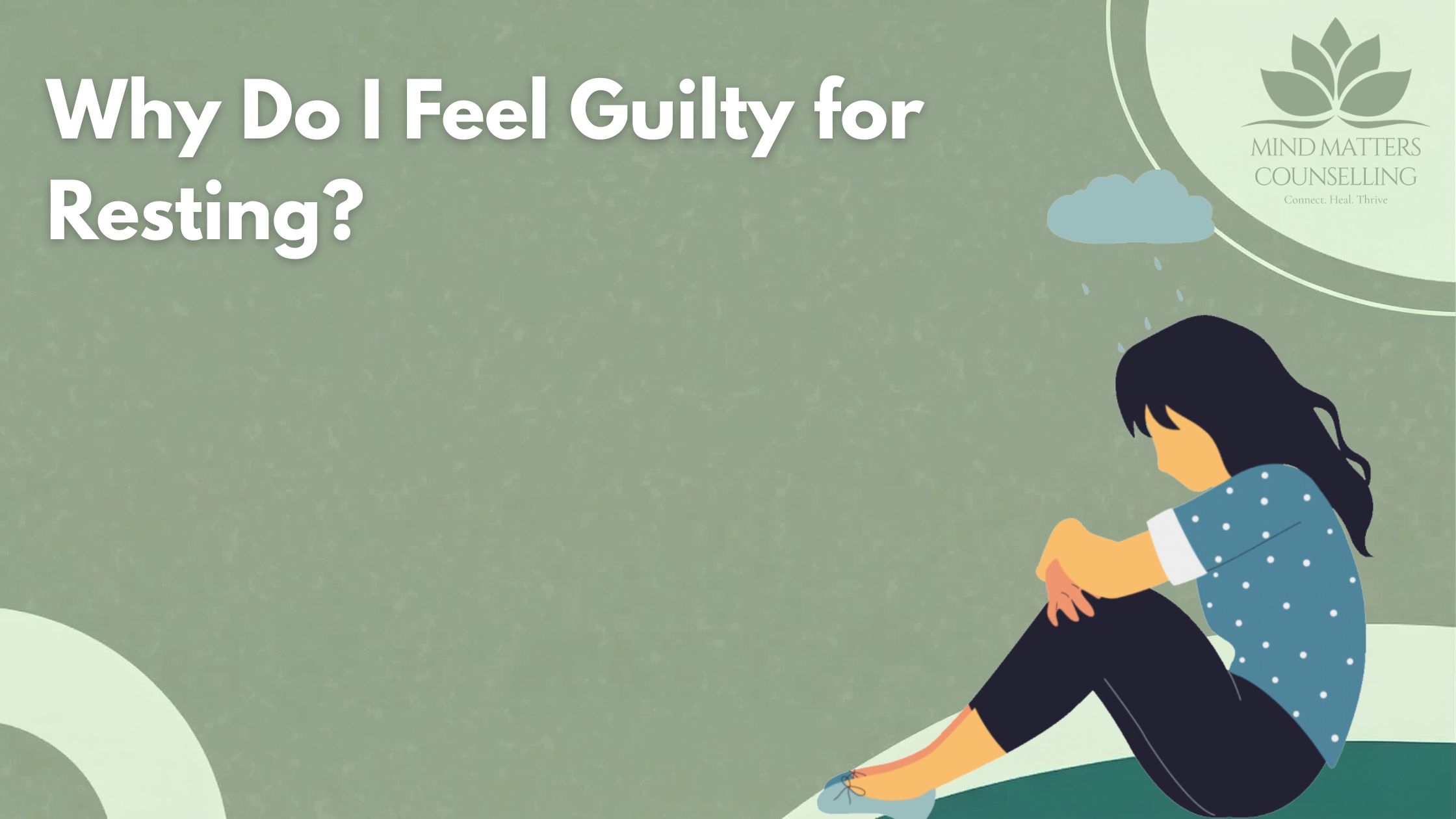
Instead, you feel guilty.
Sound familiar?
At Mind Matters Counselling, we often work with individuals in New Westminster, Burnaby, Surrey, and across British Columbia who struggle with anxiety, burnout, perfectionism, and an overwhelming sense that they must always be doing more.
Many people are surprised to discover that their difficulty resting isn’t laziness or lack of discipline, it’s often deeply connected to anxiety, self-worth, and the messages they’ve learned throughout their lives.
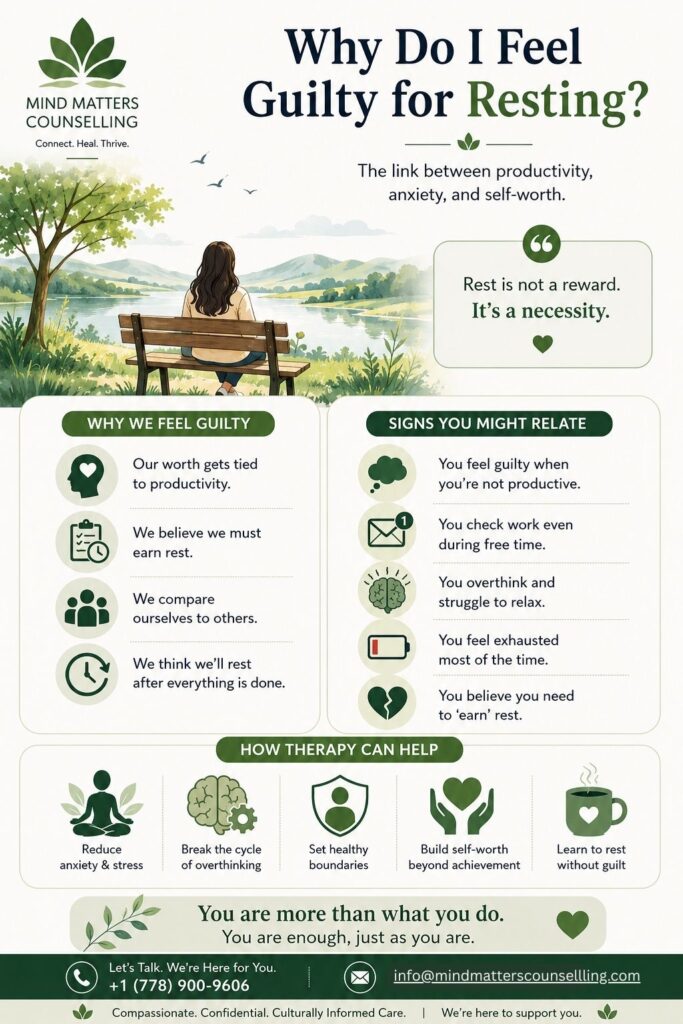
When Did Rest Become Something We Have to Earn?
Most of us weren’t taught that rest is a basic human need.
Instead, we learned messages like:
- “Work hard now, rest later.”
- “Don’t waste time.”
- “Successful people are always busy.”
- “You should be grateful and keep pushing.”
- “There are people who have it harder.”
Maybe you grew up being praised for:
- being responsible
- achieving good grades
- taking care of others
- never complaining
- always staying busy
Over time, your worth may have become tied to what you produce rather than who you are.
And suddenly, resting doesn’t feel relaxing.
It feels uncomfortable.
Why High-Functioning People Struggle to Relax
People who experience high-functioning anxiety often have a hard time slowing down.
Even when there’s nothing urgent to do, their mind keeps saying:
“What’s next?”
You may notice:
- Feeling guilty when you’re not productive.
- Struggling to enjoy vacations.
- Constantly checking emails.
- Feeling restless when you have free time.
- Thinking about tomorrow’s tasks while trying to relax.
- Believing you need to “earn” rest.
From the outside, people may see someone who’s motivated and accomplished.
But internally, you may feel exhausted.
Anxiety Doesn’t Always Look Like Panic
When people think about anxiety, they often picture panic attacks.
But anxiety can also look like:
- constantly staying busy
- difficulty sitting still
- overthinking
- perfectionism
- feeling responsible for everything
- saying yes to too much
- pushing through exhaustion
Sometimes productivity becomes a coping strategy.
Because if you’re busy enough, you don’t have to slow down and feel.
Why Women and Caregivers Often Feel Guilty for Resting
Many women have been taught that their needs come last.
They become:
- the helper
- the caretaker
- the reliable friend
- the responsible daughter
- the emotional support person
Especially in South Asian families, love is often expressed through sacrifice.
So taking time for yourself may feel selfish.
You might think:
“Everyone else comes first.”
Or:
“I’ll take care of myself after everyone else is okay.”
The problem?
That “after” often never comes.
Your Worth Is Not Measured by Your Productivity
This can be hard to believe when you’ve spent years proving yourself through achievement.
But your value as a person doesn’t increase because you answer one more email.
You don’t become more lovable because you work harder.
You don’t earn your right to rest by exhausting yourself first.
You are allowed to:
- take breaks
- say no
- have slow days
- do less
- rest without guilt
- exist without constantly proving your worth
How Therapy Can Help with Anxiety, Burnout, and Perfectionism
At Mind Matters Counselling, we support individuals struggling with:
- Anxiety and burnout
- perfectionism
- people pleasing
- chronic stress
- guilt around rest
- South Asian family pressures
- high-functioning anxiety
Together, we explore:
- where these beliefs came from
- why slowing down feels uncomfortable
- how anxiety and productivity became connected
- ways to establish healthier boundaries
- how to build self-worth beyond achievement
Healing isn’t about becoming less ambitious.
It’s about learning that you deserve rest without having to earn it.
Maybe You Don’t Need to Do More
Maybe you’re already carrying enough.
Maybe the answer isn’t becoming more productive.
Maybe it’s learning that rest is not a reward.
It’s a necessity.
And maybe your worth has never depended on how much you accomplish.
If you’re struggling with anxiety, burnout, perfectionism, or guilt around resting, Mind Matters Counselling provides compassionate, culturally informed anxiety therapy in New Westminster, Burnaby, Surrey, and across BC.
Book a session today and begin building a healthier relationship with yourself, your productivity, and your well-being.
Frequently Asked Questions
Why do I feel guilty when I rest?
Many people grow up associating their worth with productivity. This can make rest feel uncomfortable or undeserved, even when they are exhausted.
Can anxiety make it difficult to relax?
Yes. High-functioning anxiety often causes people to stay busy, overthink, and struggle to slow down, even when they need rest.
Is feeling guilty about resting a sign of burnout?
It can be. Burnout often includes chronic exhaustion, difficulty relaxing, irritability, and feeling like you always need to be productive.
Can therapy help with perfectionism and burnout?
Absolutely. Therapy can help you understand the root causes of perfectionism, anxiety, and burnout while building healthier coping strategies and boundaries.
Do you offer anxiety and burnout counselling near me in Burnaby, Surrey, or New Westminster?
Yes. Mind Matters Counselling provides therapy for anxiety, burnout, perfectionism, and stress for individuals throughout Burnaby, Surrey, New Westminster, and across British Columbia.