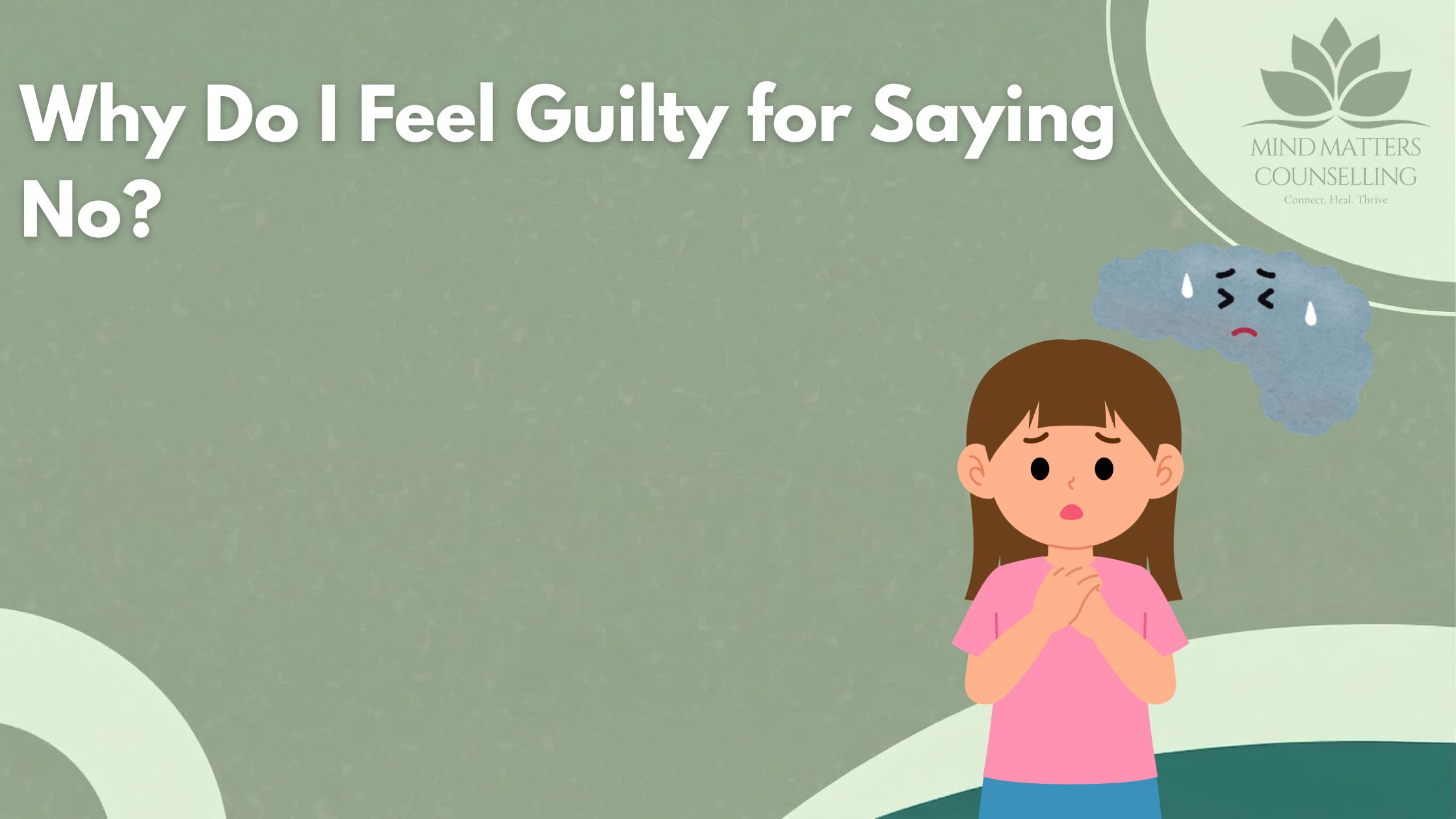
“I know I should say no, so why do I feel terrible when I do?”
Many people know they need boundaries.
They’ve read the books.
They’ve listened to the podcasts.
They tell themselves:
- “I need to stop saying yes to everything.”
- “I need to put myself first.”
- “I need better boundaries.”
And yet, the moment they decline an invitation, disappoint someone, or ask for what they need, they’re immediately flooded with guilt.
Suddenly, their mind starts racing:
- “Did I hurt their feelings?”
- “Am I being selfish?”
- “What if they’re upset with me?”
- “Maybe I should just do it.”
If this sounds familiar, you’re not alone.
At Mind Matters Counselling, we often work with individuals in New Westminster, Burnaby, Surrey, and throughout British Columbia who struggle with people pleasing, perfectionism, anxiety, and guilt around boundaries. Many clients come to therapy saying:
“I know what I should do. I just can’t seem to do it without feeling guilty.”
And that’s because setting boundaries isn’t just about learning to say no.
It’s often about unlearning years of believing that your worth depends on keeping everyone else happy.
What Is People Pleasing?
People pleasing goes far beyond being kind or considerate.
It often involves:
- Constantly putting other people’s needs before your own.
- Avoiding conflict at all costs.
- Feeling responsible for everyone else’s emotions.
- Saying yes when you want to say no.
- Overexplaining your decisions.
- Feeling guilty when you disappoint others.
- Prioritizing other people’s comfort over your own well-being.
Many people pleasers are seen as:
- dependable
- caring
- easygoing
- helpful
- selfless
But underneath, they may feel:
- exhausted
- resentful
- anxious
- overwhelmed
- disconnected from themselves
Why Is Saying No So Hard?
Pleasing people usually isn’t about weakness.
It’s about safety.
At some point, your nervous system learned:
“Keeping people happy keeps me connected.”
Or:
“If people are upset, I must have done something wrong.”
For some people, love and approval felt conditional growing up.
You may have learned:
- Don’t upset others.
- Be the good child.
- Don’t be selfish.
- Put family first.
- Be grateful.
- Keep the peace.
- Don’t create problems.
Over time, pleasing others became automatic.
Not because you wanted to lose yourself.
But because it felt safer than disappointing people.
Why Boundaries Feel So Uncomfortable
One of the biggest misconceptions about boundaries is that once you learn them, they’ll feel good.
But boundaries often feel uncomfortable before they feel healthy.
Why?
Because your brain is learning something new.
If you’ve spent years making yourself responsible for everyone else’s emotions, saying no may trigger thoughts like:
- “I’m being rude.”
- “I’m disappointing them.”
- “They’re going to think I’m selfish.”
- “I should just do it.”
The guilt doesn’t necessarily mean you’re doing something wrong.
Sometimes, guilt simply means you’re doing something different.
People Pleasing and Anxiety Often Go Hand in Hand
Many people who struggle with anxiety also struggle with boundaries.
You may find yourself:
- replaying conversations
- worrying whether someone is upset with you
- overthinking texts
- apologizing excessively
- avoiding difficult conversations
- seeking reassurance
- feeling responsible for fixing everyone’s problems
Over time, constantly carrying other people’s emotions becomes exhausting.
And eventually, resentment starts to replace connection.
The Link Between People Pleasing and Perfectionism
People pleasing and perfectionism are often closely connected.
Many people secretly believe:
“If I can do everything perfectly, nobody will be disappointed.”
This creates impossible standards.
You may feel like:
- You have to be available all the time.
- You can’t let anyone down.
- You need everyone to like you.
- Your needs come last.
- Rest has to be earned.
- Saying no makes you a bad person.
The truth?
You can disappoint someone and still be a loving, caring person.
Those two things can exist together.
Read More: How Did I End Up Becoming a People Pleaser?
Why South Asian Adults Often Struggle with Boundary Guilt
For many South Asians, boundaries weren’t modeled growing up.
Instead, family relationships may have emphasized:
- sacrifice
- duty
- obligation
- respect
- putting others first
Many adult children carry beliefs like:
- “Good daughters don’t say no.”
- “Family comes first no matter what.”
- “It’s selfish to prioritize yourself.”
- “I shouldn’t upset my parents.”
Especially for elder daughters and caregivers, being needed often became part of their identity.
As a result, setting boundaries may feel like rejecting your family, even when your intention is simply to take care of yourself.
Therapy isn’t about choosing yourself over your culture.
It’s about learning how to honor both connection and individuality.
Healthy Boundaries Don’t Push People Away
Many people worry:
“If I stop people pleasing, I’ll become selfish.”
But healthy boundaries don’t make you cold.
They make relationships more honest.
Boundaries allow you to:
- say yes because you want to, not because you feel guilty
- communicate your needs clearly
- protect your energy
- reduce resentment
- show up more authentically
The goal isn’t to stop caring about others.
It’s to stop abandoning yourself.
Signs You May Be Struggling with People Pleasing
You may benefit from support if you:
- struggle to say no
- constantly worry about disappointing others
- apologize even when you haven’t done anything wrong
- feel guilty resting
- avoid conflict at all costs
- overextend yourself regularly
- feel resentful after helping others
- prioritize everyone else’s needs before your own
- struggle with anxiety and overthinking
- don’t know what you want anymore
How Therapy Can Help with People Pleasing and Boundary Guilt
At Mind Matters Counselling, we help individuals struggling with:
- people pleasing
- anxiety
- perfectionism
- burnout
- low self-esteem
- family pressures
- relationship difficulties
- boundary guilt
Together, we explore:
- where these patterns came from
- why boundaries feel so uncomfortable
- how anxiety and people pleasing reinforce each other
- ways to communicate needs with confidence
- how to tolerate disappointing others without abandoning yourself
Our therapists provide culturally informed anxiety counselling in New Westminster, Burnaby, Surrey, and throughout British Columbia.
You Are Allowed to Have Needs
You are allowed to say:
- “Not right now.”
- “I can’t do that.”
- “I need some time.”
- “That doesn’t work for me.”
You are allowed to disappoint people sometimes.
You are allowed to choose yourself.
And you are allowed to have relationships that don’t require you to constantly earn your place in them.
If you’re struggling with pleasing people, boundary guilt, anxiety, or perfectionism, Mind Matters Counselling is here to help.
Book a session today for therapy in New Westminster, Burnaby, Surrey, and across BC.
Frequently Asked Questions
Why do I feel guilty when I say no?
Many people learn early in life that being liked, helpful, or agreeable is connected to love and acceptance. Saying no can feel uncomfortable because it challenges those beliefs.
Is people pleasing a trauma response?
People pleasing can sometimes develop as a coping strategy in response to childhood experiences, family dynamics, or environments where conflict felt unsafe.
Can anxiety make it harder to set boundaries?
Yes. Anxiety often causes people to worry about disappointing others, leading to overthinking, guilt, and difficulty saying no.
Why do South Asian adults struggle with boundaries?
Many South Asian families emphasize sacrifice, duty, and respect. These values can make boundaries feel uncomfortable, even when they are healthy and necessary.
Can therapy help with people pleasing?
Absolutely. Therapy can help you understand the root causes of people pleasing, develop healthier boundaries, and build self-worth that isn’t dependent on approval from others.